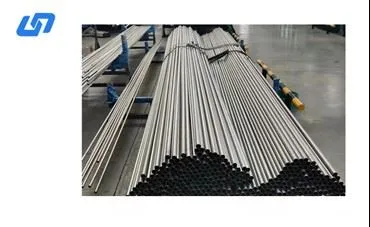
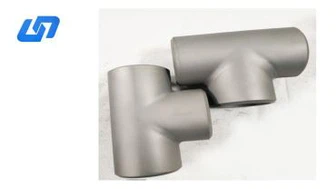
Titanium anode group for sodium hypochlorite generator
Disinfection
The main mode of action of sodium hypochlorite disinfection is to form hypochlorous acid through its hydrolysis, and then further decompose hypochlorous acid to form new ecological oxygen. The strong oxidizing property of new ecological oxygen denatures the proteins and other substances on bacteria and viruses, resulting in death pathogenic microorganisms. Secondly, in the process of sterilizing and killing viruses, hypochlorous acid can not only act on the cell wall and virus shell, but also penetrate into the body of bacteria (virus) because of its small molecule and no charge, and interact with the body of bacteria (virus). Organic macromolecules such as proteins, nucleic acids, and enzymes undergo oxidation reactions to kill pathogenic microorganisms. Again, the chloride ions produced by Sodium hypochlorite generator can also significantly change the osmotic pressure of bacteria and virions, causing the cells to lose their activity and die.
The salt solution contains Na+, H+ and other ions. According to the electrolysis theory, when the anode group is inserted, under a certain voltage, the electrolyte solution conducts electricity due to the movement of ions and the electrode reaction. At this time, Cl-, OH-, etc. Negative ions move to the anode, while positive ions such as Na+, H+ move to the cathode, and discharge occurs on the corresponding anode group, thereby performing redox reactions and generating corresponding substances. The electrolysis process of brine solution can be represented by the following reaction equation:
NaCl= Na+ + Cl-
Anode electrolysis:H20=H++OH- 2C1- - 2e一C12↑
Cathodic electrolysis:2H++2e一H2↑
In the diaphragmless electrolysis device, the electrolyte and the electrolytic product hydrogen gas solution escape outwards, and the rest are in an electrolytic cell. Since the hydrogen gas has a certain stirring effect on the solution during the process of escaping, the electrolysis between the two electrodes undergoes a series of chemical reactions.
Composition
The Sodium hypochlorite generator titanium anode group is composed of: titanium anode plate, titanium cathode plate, bipolar titanium anode group, titanium manifold, titanium flange, titanium terminal, insulating connecting rod, insulating gasket, insulating nut, etc.
The titanium anode group for sodium hypochlorite generators produced by Baoji Changsheng Titanium company have the following shapes: Ruthenium iridium titanium plate-shaped titanium anode, Ruthenium iridium titanium mesh titanium anode, Ruthenium iridium titanium expanded mesh butt welded titanium anode, Ruthenium iridium titanium rod-shaped titanium anode and other shapes and specifications, the product range of application ranges from 50g/h to 5kg/h of sodium hypochlorite generators.
Application
1. Sodium hypochlorite is a disinfectant used to disinfect and inhibit the growth of algae.
(1) Used for disinfection of drinking water, including rural drinking water and urban self-provided water sources.
(2) It is used for the treatment of hospital sewage, and the discharged sewage can meet the discharge requirements after being treated with sodium hypochlorite
(3) Used for disinfection of tableware and utensils in restaurants, restaurants, and canteens: used for disinfection of tea sets, towels, bath towels, etc. in hotels, baths, etc.: also suitable for disinfection of tableware, vegetables, fruits, etc. at home.
(4) Used for disinfection of swimming pool water.
(5) Sterilization of cooling circulating water in power plants and other algae.
2. Treatment of electroplating wastewater containing chemicals. It can oxidize cyanide into a non-toxic substance, making the cyanide content in the discharged wastewater reach the discharge standard. 2. Treatment of electroplating wastewater containing chemicals. It can oxidize cyanide into a non-toxic substance, making the cyanide content in the discharged wastewater reach the discharge standard.
3. Reduce BOD. Oxidation of organic compounds present in wastewater by chlorine
4. Remove color and taste. The color and gas produced in industrial wastewater (such as printing and dyeing industry) are oxidized by chlorine to remove color and control odor.
5. Bleach. Sodium hypochlorite can be used as bleaching solution in papermaking, printing and dyeing, textile and other parts, and its effect is equivalent to that of liquid chlorine or bleaching powder.