

-
![Titanium Centrifugal Pump For Sodium Hypochlorite]() Titanium Centrifugal Pump For Sodium Hypochlorite
Titanium Centrifugal Pump For Sodium HypochloriteProduct Name: titanium centrifugal pump
Material: Titanium Gr2
Flow rate: Up to 2000m3/h
Head: Up to 160m
Voltage:220V/380V/415V/460V or as customer required
Design... -
![Welded Titanium Pipe For Sodium Hypochlorite]() Welded Titanium Pipe For Sodium Hypochlorite
Welded Titanium Pipe For Sodium HypochloriteMaterial: grade 2 titanium
· Chemical Composition % of Titanium Gr. 2 (UNS R50400/WERKSTOFF NR.3.7035)
· Mechanical Properties of Titanium Gr. 2 (UNS R50400/WERKSTOFF... -
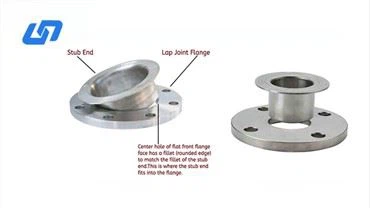
![Titanium 150# Flat-Backed Flanges For Storage Tanks]() Titanium 150# Flat-Backed Flanges For Storage Tanks
Titanium 150# Flat-Backed Flanges For Storage TanksStandard : ANSI / ASME B16.5
Size: 1/8" NB to 48" NB
Pressure: 150#
Wall thickness: SCH5S-SCH XXS
Material: Titanium Gr2 -
![Sodium Hypochlorite Storage Tank]() Sodium Hypochlorite Storage Tank
Sodium Hypochlorite Storage TankSuggest: Titanium storage tank
Projects: Stonecutter Island Sewage Treatment Works upgrading
Tank volume: 800m3
Origin: China -
![Titanium Storage Tank For Sodium Hypochlorite]() Titanium Storage Tank For Sodium Hypochlorite
Titanium Storage Tank For Sodium Hypochlorite1. Titanium and its alloy.
2. Corrosion-resistant and lightweight.
3. Suitable for calcium hypochlorite solution.
4. Type: Vertical and Horizontal.
5. We can make...




Sodium hypochlorite (or bleach) is a key ingredient in thousands of production and disinfection processes in a variety of industries. It can be used to disinfect drinking water, prevent the growth of algae and shellfish, control odors in water and wastewater treatment plants, and more. Many different types of titanium materials are available for sodium hypochlorite. The main product use of titanium is storage tanks. Titanium storage tanks are the best material choice for sodium hypochlorite.The grade commonly used is Commercial Pure Grade 2. While titanium tanks cost significantly more than carbon steel or other materials, titanium tanks can be used for very unusual requirements, i.e., a virtually unlimited service life without failure.
Titanium In Sodium Hypochloriteare gaining popularity, and sodium hypochlorite is a major irritant in endodontics. This paper explored the consumption of nickel-titanium Lightspeed instruments in 1% and 5% NaOCl arrangements. Electrothermal absorption spectrometry in 100 microL aliquots of NaOCl was used to measure corrosion on the instruments after they were submerged in ultrasonic NaOCl solutions for up to one hour. Foundation defilement of nickel in the 1% and 5% NaOCl arrangements utilized was low, yet sufficiently high to meddle in recognizing any expansions in nickel subsequent to submerging the instruments. The measures of titanium kept in the 1% NaOCl arrangements were unimportant. However, after 30 and 60 minutes of immersion in 5% NaOCl, the Lightspeed instruments detected a statistically significant amount of titanium. Since such instruments do not have a 30-minute "in situ" time, corrosion may be considered clinically irrelevant.
A titanium anode plate suitable for a sodium hypochlorite generator is the subject of the utility model. Ruthenium, iridium, and titanium oxide coatings are applied to the surface of the titanium base material that makes up the titanium anode plate. The titanium anode plate increases an anode's reduction resistance, is appropriate for an electrolyte with a low chloride ion concentration, can reverse the pole during electrolysis, and has a good effect on chlorine separation; The titanium anode plate has a higher oxygen separation potential than either ruthenium or titanium; oxygen is challenging to deliver during electrolysis of brackish water; furthermore, the titanium anode plate has a somewhat high reasonable worth.
Find professional titanium for sodium hypochlorite field manufacturers and suppliers in China here. We're offering the best customized service with low price. Please rest assured to wholesale bulk titanium for sodium hypochlorite field in stock here from our factory.
