


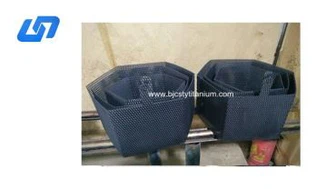
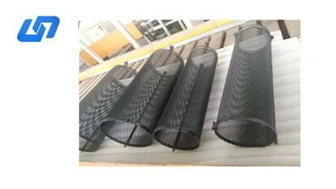
Titanium Anode For Electrolytic Dialysis
1. Application Areas: Electrolytic dialysis devices have been widely used in industries such as power, chemical, electronics, environmental protection, pharmaceuticals, textiles, and food, achieving satisfactory economic benefits. Specific applications include:
Product Introduction
1. Application Areas: Electrolytic dialysis devices have been widely used in industries such as power, chemical, electronics, environmental protection, pharmaceuticals, textiles, and food, achieving satisfactory economic benefits. Specific applications include:
1) Desalination of seawater and brackish water to produce potable water.
2) Production of water for beverages such as beer, soda, and purified water.
3) Production of water for low-pressure boilers.
4) Combined use of electrolytic dialysis and ion exchange to produce distilled water, high-purity water, and ultrapure water. This method of water production can save 80-90% of acids and alkalis, avoid frequent regeneration of resins, and greatly reduce water production costs.
5) Combined with other different treatment units to produce water suitable for higher-grade industries such as electronics, pharmaceuticals, food, and chemicals.
6) Recovery of precious metals such as Au, Ag, Cu from industrial wastewater (liquids) in industries such as electroplating and electronics.
2. Principle:
Under the action of an applied DC electric field, utilizing the permeability of ion exchange membranes (i.e., cation membranes allowing only cations to pass through and anion membranes allowing only anions to pass through), the directional migration of anions and cations in water is achieved, thereby separating ions from water in a physicochemical process. The principle is: Between the cathode and anode, there are several alternating arranged cation and anion membranes. Water passes through the two membranes and the compartments formed between the two membranes and the two electrodes. After the power supply is connected to the two electrodes, anions and cations in the water migrate towards the cathode and anode, respectively. Due to the selective permeability of the cation and anion membranes, alternating compartments with reduced ion concentrations (dilute chambers) and increased ion concentrations (concentrate chambers) are formed. Meanwhile, oxidation-reduction reactions, i.e., electrode reactions, also occur on the two electrodes. As a result, scale forms in the cathode chamber due to the alkaline solution, while corrosion occurs in the anode chamber due to the acidic solution. Therefore, during the process of electrolytic dialysis, the consumption of electrical energy is mainly used to overcome the resistance encountered by the current passing through the solution and membranes, and electrode reactions.
3. Device:
The construction of an electrolytic dialyzer includes pressure plates, electrode support plates, electrodes, pole frames, anion membranes, concentrate water baffles, dilute water baffles, and other components. These components are assembled in a certain order and compressed to form a certain form of electrolytic dialyzer. Auxiliary equipment for the electrolytic dialyzer also includes water pumps, rectifiers, etc., which together constitute an electrolytic dialysis device.
4. Electrochemical Performance and Lifespan Testing (Reference Standard HG/T2471-2007 Q/CLTN-2012)
|
Name |
Intensified Weight Loss (mg) |
Polarization Rate (mV) |
Chlorine Evolution Potential (V) |
Testing Conditions |
|
Titanium-based Ruthenium Iridium |
≤10 |
40 |
<1.13 |
1mol/L H₂SO₄ |
|
Titanium-based Iridium Tantalum |
≤10 |
40 |
<1.45 |
1mol/L H₂SO₄ |
5. Current Density and Polarization Phenomenon:
During the operation of the electrolytic dialyzer, the current passing through per unit membrane area is called current density. During operation, when the current density reaches a certain value, the migration speed of ions at the interface layer is much lower than that inside the membrane, forcing water molecules at the membrane interface to ionize, relying on hydrogen ions and hydroxyl ions to conduct electricity. This membrane interface phenomenon is called concentration polarization. At this time, the current density is called limiting current density. Polarization includes concentration polarization and electrode polarization. After polarization occurs, excess hydroxyl ions accumulate on one side of the dilute chamber of the cation membrane, and excess hydrogen ions accumulate on one side of the concentrate chamber of the cation membrane; excess hydrogen ions accumulate on one side of the dilute chamber of the anion membrane, and excess hydroxyl ions accumulate on one side of the concentrate chamber of the anion membrane. Due to the high ion concentration in the concentrate chamber, precipitates such as calcium carbonate form on one side of the anion membrane in the concentrate chamber, increasing membrane resistance, increasing energy consumption, reducing the effective area of the membrane, lowering the water quality, and affecting normal operation.
Hot Tags:
You Might Also Like



Send Inquiry
