


platinized titanium anode
1. Substrate: TA1
2. Connection method of electrode column: bump welding, spot welding or screw fixing
3. Coating process: Platinum plating
4. Coating amount of precious metal: 0.2-5μm
5. the use of environmental PH: 2-12
6. Working current density: ≦3000A/m2
Product Introduction
Platinized Titanium Anodes are high-performance insoluble electrodes designed for electrochemical water treatment and electrolyzed functional water systems. They consist of a titanium substrate, typically TA1/Gr1 titanium, coated with a controlled layer of platinum (Pt).
The platinum coating provides excellent electrocatalytic activity and corrosion resistance, enabling stable electrode performance during electrolysis. Depending on the electrolyte composition, electrode configuration, and operating conditions, platinized titanium anodes can be used in systems for electrolyzed acidic and alkaline water, hydrogen-rich water generation, cleaning, disinfection, and other electrochemical water treatment applications.
Working Principle
During electrolysis, direct current is applied between the anode and cathode through an electrolyte-containing water solution.
At the electrodes, electrochemical reactions take place and water is separated into different streams or reaction zones according to the design of the electrolytic cell.
At the anode, oxidation reactions occur, while reduction reactions take place at the cathode. Depending on the electrolyte and operating conditions, the process can generate hydrogen, oxygen, hydrogen ions, hydroxide ions, and other electrochemically active species.
The platinum coating serves as an electrocatalytic surface, facilitating electrode reactions and providing stable electrochemical performance.
The actual composition and properties of the generated water depend on factors such as electrolyte composition, current density, electrode spacing, water quality, temperature, and electrolysis time.
Key Features
High Electrocatalytic Activity
Platinum provides excellent catalytic activity for a wide range of electrochemical reactions, making Pt-Ti electrodes suitable for compact and high-efficiency electrolysis systems.
Excellent Corrosion Resistance
The titanium substrate combined with the platinum coating provides good resistance to corrosion in appropriately controlled acidic and alkaline operating environments.
Stable Electrochemical Performance
A properly prepared Pt coating provides a stable active surface and reliable electrical performance during continuous electrolysis.
High Current-Density Capability
The electrode can be engineered for different current densities and cell configurations to meet the requirements of laboratory, commercial, and industrial electrolysis systems.
Flexible Electrode Design
Platinized titanium electrodes can be manufactured in various shapes and configurations to accommodate different electrolytic cell designs.
Low Maintenance
The corrosion-resistant Ti/Pt electrode structure helps reduce electrode replacement frequency when operated within the recommended electrical, chemical, and temperature conditions.
Technical Specifications
| Parameter | Specification |
|---|---|
| Substrate Material | TA1 / Gr1 Titanium |
| Coating Material | Platinum (Pt) |
| Typical Pt Coating Thickness | 0.2–5 μm |
| Substrate Thickness | 0.5 mm or customized |
| Recommended Current Density | ≤ 3000 A/m²* |
| Operating Temperature | ≤ 65°C* |
| Applicable pH | Approximately 2–12* |
| Connection | Spot Welding / Screw Fixing / Projection Welding |
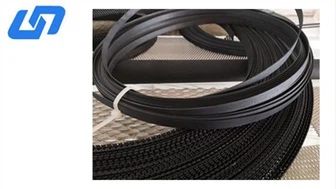
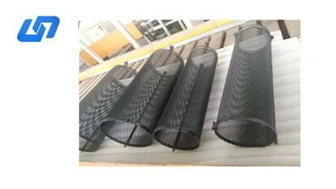
| Electrode Forms | Mesh / Ring / Strip / Honeycomb / Customized |
* Actual operating limits depend on electrolyte composition, electrode geometry, coating specification, cell design, and operating conditions. Please contact us for application-specific recommendations.
Available Electrode Configurations
To accommodate different electrolytic cell designs, platinized titanium anodes can be manufactured in various forms, including:
Titanium mesh electrodes
Ring-shaped electrodes
Strip electrodes
Honeycomb electrodes
Plate electrodes
Custom-designed electrodes
Dimensions, connection positions, coating areas, substrate thickness, and platinum loading can be customized according to customer drawings and technical requirements.
Manufacturing Process
The performance and service life of a platinized titanium anode depend strongly on substrate preparation and coating quality.
Our typical manufacturing process includes:
Titanium substrate preparation
The titanium substrate is cut, formed, and mechanically prepared according to the required electrode geometry.
Surface cleaning and activation
The substrate surface is thoroughly cleaned and activated to ensure proper adhesion of the platinum coating.
Platinum coating
A controlled platinum deposition process is used to form the required catalytic coating on the titanium substrate.
Coating thickness control
Platinum deposition parameters are controlled according to the specified coating thickness or platinum loading.
Heat treatment and coating stabilization
Appropriate post-treatment processes may be applied according to the coating system and electrode design.
Quality inspection
Finished electrodes can be inspected for coating thickness, surface condition, dimensional accuracy, coating uniformity, and electrical continuity.
Quality Control
To ensure consistent electrode performance, quality control can include:
Substrate dimensional inspection
Surface condition inspection
Platinum coating thickness measurement
X-ray fluorescence (XRF) analysis
Coating uniformity inspection
Adhesion and surface integrity inspection
Dimensional and connection inspection
Electrical performance testing when required
Inspection requirements can be customized according to the customer's technical specification.
Applications
Platinized titanium anodes are used in a variety of electrochemical water and hydrogen-related systems, including:
Electrolyzed Functional Water Systems
Electrolyzed water generators
Acidic and alkaline water generators
Functional water production systems
Commercial electrolyzed water equipment
Hydrogen-Rich Water Systems
Hydrogen water generators
Hydrogen-rich water production equipment
Electrolysis-based drinking water systems
Cleaning and Disinfection
Food and equipment cleaning systems
Electrochemical disinfection systems
Surface cleaning applications
Water treatment and hygiene equipment
Hydrogen Production
Small-scale water electrolysis systems
Hydrogen generation equipment
Laboratory electrochemical systems
Specialized electrolytic devices
Application Example – Food Processing
In food processing and related applications, electrolyzed water systems can be used for cleaning and sanitation processes.
Depending on the system configuration, electrolyzed water may be applied to:
Cleaning food-processing equipment
Cleaning production surfaces
Treatment of food-contact surfaces
Washing and sanitation processes for fresh produce
The effectiveness of the process depends on parameters including water chemistry, pH, oxidation-reduction potential, active species concentration, treatment time, temperature, and system design.
Platinized titanium anodes provide a durable catalytic electrode surface for the electrochemical generation process.
Advantages of Pt-Ti Anodes
High electrocatalytic activity
Good corrosion resistance
Stable Ti/Pt electrode structure
Uniform platinum coating
Customized electrode geometry
Suitable for continuous electrolysis
Low electrode maintenance requirements
Available with different platinum coating specifications
Precautions for Use
To maintain electrode performance and service life:
Avoid scratching, impact, bending, or other mechanical damage to the platinum-coated surface.
Prevent contamination by oil, grease, or other foreign substances during installation and handling.
Connect the electrode to the correct polarity according to the electrolytic cell design.
Avoid direct contact between anode and cathode.
Operate within the recommended current density, temperature, and chemical conditions.
Maintain appropriate water and electrolyte quality.
Do not use aggressive chemicals or cleaning methods that may damage the platinum coating.
Store electrodes in clean and dry conditions before installation.
Customized Pt-Ti Anodes
Changsheng Titanium manufactures platinized titanium anodes according to customer drawings, electrode dimensions, coating requirements, and operating conditions.
We can customize:
Titanium substrate grade
Electrode dimensions
Electrode shape
Platinum coating thickness or loading
Coating area
Connection method
Mounting configuration
Electrical requirements
For a suitable electrode design, please provide the electrolyte composition, current or current density, operating temperature, electrode dimensions, application, and expected service life.
Our technical team can recommend an appropriate Ti/Pt electrode structure and coating specification based on the actual operating conditions.
Hot Tags:
You Might Also Like


Send Inquiry
