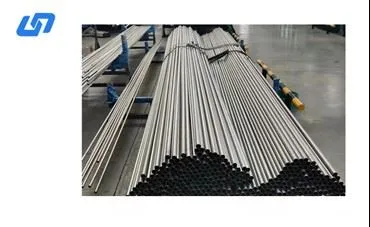
titanium equipment of technology and actuality
Titanium equipment application:
At present, the annual consumption of titanium materials in China is more than 2000t, about 90% of which are used for civil use. About 70% of the civilian titanium materials are used to manufacture containers, of which about 50% are pipe materials, 34% are plate and strip materials, 12% are bar and forging materials, 2% are wire materials, and 2% are castings. Because titanium materials have excellent corrosion resistance in many acid, alkali and salt media, they are widely used in petroleum, chemical industry, metallurgy, offshore engineering and other industries.
Although the price of titanium equipment is high, due to its long service life and low maintenance cost, it is conducive to reducing the consumption of raw materials and energy, improving labor conditions and obtaining high economic benefits.
Since most of the titanium materials used in the chemical process are pressure vessels, it is required that the titanium materials not only have excellent corrosion resistance, but also have high comprehensive mechanical properties and good welding properties.
Titanium equipment manufacturing
1 Preliminary preparations
(1) A titanium equipment manufacturing area is specially divided, and it is strictly prohibited to mix and contact with carbon steel equipment.
(2) Materials shall be warehoused and kept properly, and shall not be stacked in the open air. At the same time, several special corner material boxes for titanium materials are set to sort and recycle the leftover materials.
(3) Design and manufacture the necessary special machines, tools, moulds, etc. Equipment such as plate shears, edge planers, plate rollers, etc. shall be kept clean to prevent oil stains, iron filings, defects on rollers, etc. from damaging the titanium surface.
(4) The personnel participating in titanium equipment manufacturing shall dress in accordance with the requirements. The work clothes and gloves shall be clean. Shoes with nails are not allowed, and walking on the titanium plate shall be avoided as far as possible.
2. Marking and blanking
Titanium materials are highly sensitive to defects, so it is forbidden to strike the surface of titanium materials with a hammer or punch or steel seal, and it is forbidden to write relevant marks with ink or paint. Titanium materials are also easily polluted by iron, oil, etc. after blanking and cutting, the polluted parts must be polished with a grinder. Therefore, some machining allowance should be properly reserved during scribing, generally 10~20mm.
Plate cutting, grinding machine or plasma arc cutting are used for blanking.
3. Machining groove
For plates, bevels are required to be planed on the edge planer, and for pipes, bevels are required to be planed on the lathe. The bevels are all V-shaped. Long plates are prone to bending and tearing during the edge planing process. In order to solve these problems, we use channel steel to press the planing end to increase the pressing force of the planing machine on the plate, and reduce the length of the plate extending out of the planing machine (from the conventional 50mm to 30mm) to increase its stiffness, and then adjust the blade angle of the tool, and use low speed and small feed to cut. As a result, the groove is as bright as a mirror, and the roughness of the groove is much lower than that of carbon steel and stainless steel.
Note that the feeding shall not be stopped in the process of titanium edge planing, otherwise it is easy to cause cutting surface hardening.
4. plate rolling
The springback of titanium plate during rolling is larger than that of carbon steel and stainless steel, which makes it difficult to spot weld. Spot welding shall be carried out immediately after the barrel joint is rounded on the plate rolling machine.
Conical head, nozzle with diameter ≥ 108mm (without seamless titanium pipe, it needs to be rolled with plate), manhole barrel joint, etc. cannot be formed on the plate rolling machine, and can be pressed with self-made mould.
Welding and inspection
Manual argon tungsten arc welding shall be adopted for titanium welding. Compared with carbon steel and stainless steel, titanium also has higher chemical activity due to its high melting point, large heat capacity and poor thermal conductivity. When welding, it is very easy to react violently with oxygen, hydrogen, nitrogen, carbon and other elements, resulting in embrittlement of the welded joint and easy to produce cracks. In order to obtain welds with good mechanical properties, surface cleaning before welding and protective measures during welding are the key to ensure welding quality.
Due to the high affinity of titanium to oxygen, hydrogen and nitrogen, it is easy to reduce the plasticity of welded joints. Therefore, the weld pool and the welding heat affected zone above 400 ℃ at the back must be strictly protected. The protection of the molten pool is completed by the welding torch, and the heat affected zone and the heated parts above 400 ℃ are protected by the protection box. The protection box is best made of copper, and the argon flow is appropriate to be 7~15l/min, which is too small and has poor protection effect; Too much will cause turbulence of air flow and bring air into the welding area. Therefore, argon should be kept in laminar flow.
The weld quality shall be inspected by visual inspection, coloring and radiographic inspection. The visual inspection mainly observes the surface defects of the weld and the color of the welded joint, and judges the gas protection effect according to the surface color. Table 1 shows the judgment of titanium weld surface color and welding quality.
Table 1 Determination of weld color and welding quality of titanium materials
Color | protection | Welding condition | Joint quality | Treatment measures |
| Slivery white | good | good | Reliable use | No processing required |
| golden | fair | no impact | can use | Polish off the golden surface with sandpaper |
| blue | general | The surface is oxidized and the surface plasticity decreases slightly | Can’t be used under heavy load | Polished the blue surface with sandpaper |
purple | poor | Severe oxidation and significantly reduced plasticity | Can’t be used under harsh service conditions(media and load) | Polished the purple surface with sandpaper |
| Grey or surface has powdery | Very bad | Complete oxidation, easy to produce cracks, pores and other defects | Can’t be used | Unqualified, re-welding |
For welds with local unqualified surface color, the heat affected zone must be completely ground off with a grinding wheel and then re welded. The number of repair welding shall not exceed two times. Coloring and radiographic testing shall be carried out according to jb4730-94 "nondestructive testing of pressure vessels". The coloring testing shall meet the requirements of class II and radiographic testing shall meet the requirements of class III.