What is ASTM F2063?
Presentation:
ASTM Worldwide is a universally perceived forerunner in the improvement of willful agreement norms. In this article, we will investigate ASTM F2063, its importance in the metal business, and its applications in the clinical field.
What is ASTM F2063?
ASTM F2063 is a standard determination for created nickel-titanium shape memory combinations for clinical gadgets and careful inserts. The determination frames the necessities for the compound piece, mechanical properties, and aspects of these amalgams. The standard was first distributed in 2005 and was last refreshed in 2019.
ASTM F2063 fills in as a vital rule for makers, creators, and administrative bodies engaged with the creation and utilization of nickel-titanium compounds for clinical applications. It guarantees the steady quality, execution, and security of these compounds in medical care settings.
The standard determines the base rates of nickel and titanium in the amalgam, as well as far as possible for different components present. It additionally characterizes the expected mechanical properties like rigidity, extension, and the change temperature range for shape memory impact and superelasticity.
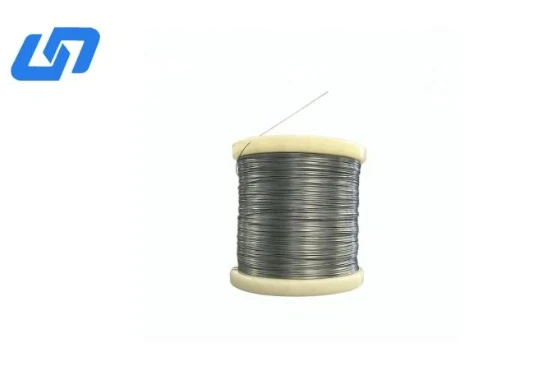
What is Nitinol?
Nitinol is a business trademark for a kind of nickel-titanium composite that shows shape memory and superelasticity. Shape memory alludes to the compound's capacity to get back to its unique pre-twisted shape when exposed to a particular boost, like intensity or stress evacuation. Superelasticity, then again, is the extraordinary property of the combination to recuperate a lot of twisting after dumping, without long-lasting disfigurement.
Nitinol gets its name from the blend of its parts: Nickel (Ni), Titanium (Ti), and the Maritime Arms Research center (NOL) where it was first evolved. This material's shape memory and superelastic qualities make it exceptionally reasonable for different clinical applications, including stents, orthodontic wires, dental instruments, vascular conclusion gadgets, and bone obsession inserts.
What is the ASTM Standard for Nitinol?
The ASTM standard for nitinol is F2063. This detail covers the compound sythesis, mechanical properties, and aspects of fashioned nickel-titanium shape memory composites planned for use in clinical gadgets and careful inserts.
ASTM F2063 guarantees that nitinol combinations meet explicit prerequisites to ensure their dependable presentation and biocompatibility in clinical applications. It presents rules for the assembling system, including dissolving, hot working, heat treatment, and last handling of the combinations. The standard likewise characterizes the acknowledgment rules for item quality and testing systems, like ductile testing, layered estimations, and shape recuperation assessment.
What is ASTM F2063-05?
ASTM F2063-05 alludes to an obsolete variant of the ASTM F2063 standard. At first distributed in 2005, this variant has since been reconsidered and refreshed on numerous occasions, with the latest update in 2019. It is actually quite important that ASTM norms normally go through occasional amendments to consolidate progressions in innovation, industry rehearses, and administrative prerequisites.
While ASTM F2063-05 may in any case be referred to in specific ventures or applications, it is fundamental to counsel the latest rendition of the norm (ASTM F2063-XX) to guarantee consistence with the most recent rules and details.
What is the Contrast Between ASTM D and ASTM E?
ASTM D and ASTM E are two separate arrangements of norms created by ASTM Global, each serving various ventures and materials types.
ASTM D norms essentially center around materials connected with plastics, rubbers, and materials. These norms cover many themes, including testing strategies for actual properties, warm examination, mechanical testing, ecological openness, and material portrayal.
Then again, ASTM E norms focus on the presentation of materials in underlying applications, like metals, pottery, and composites. These guidelines address perspectives like mechanical testing of materials, weariness and break conduct, erosion testing, nondestructive testing strategies, and assessment of material properties at raised temperatures.
Both ASTM D and ASTM E principles assume critical parts in quality control, item advancement, and execution appraisal across different ventures, giving normalized strategies and rules to testing, portrayal, and assessment of various sorts of materials.
What is ASTM in piping?
In the funneling business, ASTM norms assume an imperative part in guaranteeing the quality, wellbeing, and execution of channeling frameworks. These guidelines cover materials, aspects, development strategies, testing methods, and other fundamental perspectives connected with different kinds of lines, fittings, valves, and ribs.
ASTM principles for channeling envelop a great many determinations, including those for metallic lines (like steel, copper, and cast iron), plastic lines (like PVC and HDPE), and composite lines. These principles characterize necessities for material creation, mechanical properties, layered resiliences, pressure appraisals, and testing methods to guarantee that channeling frameworks fulfill industry guidelines and administrative prerequisites.
Sticking to ASTM principles in funneling guarantees similarity, dependability, and strength of the parts, working with productive liquid transportation and appropriation in assorted modern, business, and private applications.
What does ASTM stand for in concrete?
ASTM represents the American Culture for Testing and Materials, which is presently known as ASTM Global. In the substantial business, ASTM guidelines are broadly used to decide the quality and execution of different substantial materials and items.
ASTM principles connected with substantial cover a wide range of viewpoints, including concrete, totals (like sand, rock, and squashed stone), admixtures, restoring compounds, testing strategies for new and solidified concrete, substantial properties, lightweight endlessly substantial line producing. These norms give rules to material choice, blending, testing, and assessment to guarantee the ideal strength, sturdiness, usefulness, and other fundamental properties of cement.
By sticking to ASTM norms in substantial creation and development, partners can guarantee consistency, dependability, and consistency in substantial materials and designs. These principles work with viable correspondence among providers, workers for hire, creators, and administrative bodies, advancing protected and reasonable substantial development rehearses.
End:
ASTM F2063 assumes a basic part in directing the creation and utilization of nickel-titanium shape memory composites in clinical gadgets and careful inserts. Nitinol, a particular kind of nickel-titanium compound, displays shape memory and superelasticity, making it appropriate for different clinical applications. ASTM principles, like F2063, give fundamental rules and details to guarantee the steady quality, execution, and security of these amalgams.
Understanding the importance and subtleties of ASTM guidelines is significant for experts in the metal business and different areas that depend on materials execution, adherence to guidelines, and keeping up with great principles.
References:
ASTM Worldwide. (n.d.). ASTM F2063/F2063M - 19 Standard Particular for Fashioned Nickel-Titanium Shape Memory Combinations for Clinical Gadgets and Careful Inserts. Recovered from https://www.astm.org/Guidelines/F2063.htm
ASM Worldwide. (2019). Handbook of Materials Choice. Hoboken, NJ: John Wiley and Children Inc.
American Welding Society. (2020). Welding Handbook. Miami, FL: AWS.