


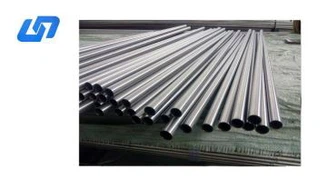
Titanium Medical Bar
Titanium medical bar is high in hardness and light in weight, and will not rust or deteriorate, nor cause metal allergy. Titanium material has special current characteristics and will have beneficial physiological effects on human body.
Product Introduction
Titanium medical bar is a high-performance biomedical material widely used in medical implants, surgical instruments, and orthopedic applications.
It features low density, high hardness, excellent corrosion resistance, and strong biocompatibility, making it one of the most important materials in modern medical engineering.
Titanium does not rust, degrade, or cause metal allergies, and it maintains long-term stability inside the human body.
Key Characteristics
Lightweight with high strength
Excellent corrosion resistance in physiological environments
Strong biocompatibility (non-toxic, non-allergenic)
Stable chemical properties over long periods
No degradation or performance loss over time
Favorable electrochemical behavior for biological compatibility
Medical Industry Background
In recent years, biomedical materials have shown strong global growth:
Annual market growth rate: ~30% (last decade average)
Expected to become a pillar industry of the 21st-century economy
Strong demand in orthopedic, dental, and implant sectors
Currently:
Only a fraction of patients requiring implants receive treatment
Joint replacement procedures: ~1.5 million/year globally
Huge unmet demand in orthopedic and dental markets
This indicates a rapidly expanding market for medical titanium materials.
Global Applications of Titanium in Medicine & Industry
Titanium medical materials are widely used in:
Orthopedic implants (joints, plates, screws)
Dental implants
Surgical tools and devices
Cardiovascular implants
Biomedical engineering components
Titanium also plays a key role in:
Aerospace engine parts
Desalination systems
Offshore oil & gas structures
Chemical processing equipment
Advanced infrastructure projects worldwide
Quality Requirements
Hydrogen Content Control
H content in Gr5 / Gr5ELI ≤ 0.010%
Dimensional Accuracy
Manufactured according to customer specifications
Controlled tolerance using precision measurement tools
Surface & Internal Quality
No cracks, pores, or inclusions (metallic or non-metallic)
No visible surface defects under inspection
Microstructure Requirements
Uniform annealed structure
Grain size not coarser than Grade 5
Key Advantages in Medical Use
High safety for long-term implantation
Excellent fatigue resistance under body movement
Stable interaction with biological tissue
Proven long-term clinical reliability
Hot Tags:
You Might Also Like


Send Inquiry
