


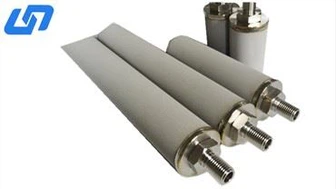
Titanium Water Filter
titanium water filter is used for filtering materials、electrodes、heat transfer materials、catalyst carrier materials、noise cancelling materials according to their physical and structural properties.
Product Introduction
Sintered porous metal filters are precision filtration components manufactured from porous metallic materials through controlled powder metallurgy and sintering processes.
The interconnected pore structure provides controlled filtration, stable gas or liquid flow, and high mechanical strength. Compared with conventional polymeric filter media, porous metal filters can provide better resistance to elevated temperatures, pressure, and demanding industrial environments.
We supply porous filters in titanium, stainless steel, bronze, nickel, and selected high-temperature alloys, with customized pore size, filtration rating, dimensions, and configuration.
Available product forms include round discs, sheets, tubes, and cylindrical filter cartridges.
Typical Applications
Porous metal filters can be used for:
Electrolytic gas filtration
Gas distribution
Ozone aeration
Water treatment
Odor-control and gas treatment systems
Reverse osmosis pre-filtration
Electronics and precision fluid systems
Chemical processing
Industrial gas and liquid filtration
Technical Specifications
| Parameter | Specification |
|---|---|
| Filtration Rating | 0.5–80 μm |
| Pore Size | 1–200 μm |
| Porosity | 20–40% |
| Wall Thickness | >2.5 mm or customized |
| Diameter | φ8–φ320 mm |
| Length | 100–1200 mm |
| Welded Joints | Up to 1200 mm length available without welded joints |
| Maximum Working Pressure | Up to 0.6 MPa |
| Temperature Resistance | 250 / 500 / 800°C, depending on material and operating conditions |
| Materials | Titanium, stainless steel, bronze, nickel, high-temperature alloys, etc. |
| Customization | Available |
Note: Filtration rating and pore size are related but are not interchangeable parameters. Actual filtration performance depends on pore structure, material, filter thickness, fluid properties, and operating conditions.
Special specifications can be customized according to customer drawings and application requirements.
Available Materials
Titanium Porous Filters
Titanium sintered porous materials combine low density, corrosion resistance, and mechanical strength. They are particularly suitable for applications involving seawater, selected chemical solutions, water treatment, gas distribution, and electrochemical processes.
Typical applications include:
Ozone aeration
Electrolytic gas filtration
Gas distribution
Water treatment
Reverse osmosis pre-filtration
Chemical filtration
Corrosive fluid filtration
Stainless Steel Porous Filters
Stainless steel porous filters offer a balance of mechanical strength, corrosion resistance, and cost efficiency.
Common materials include:
SS304
SS316L
Other stainless steel grades according to requirements
They are suitable for industrial water treatment, chemical processing, food and beverage processing, gas filtration, and general industrial filtration.
Bronze Porous Filters
Sintered bronze filters are commonly used for gas and liquid filtration, pneumatic systems, lubrication systems, and applications where good permeability is required.
Nickel Porous Filters
Nickel porous materials are suitable for selected high-temperature, chemical, and gas filtration applications where nickel-based corrosion resistance and thermal performance are required.
High-Temperature Alloy Porous Filters
Selected high-temperature alloys can be used for filtration applications involving elevated temperatures or demanding chemical environments.
Material selection should be based on the operating temperature, pressure, fluid composition, corrosion conditions, and required filtration performance.
Available Product Forms
| Product Form | Length / Diameter | Width / Diameter | Thickness | Customized |
|---|---|---|---|---|
| Round Discs | φ5–φ400 mm | φ5–φ400 mm | 1–20 mm | Yes |
| Sheets | 1–600 mm | 5–400 mm | 1–20 mm | Yes |
| Tubes | 100–1200 mm | φ20–φ200 mm | 1–10 mm | Yes |
| Filter Cartridges | 100–1200 mm | φ20–φ200 mm | 1–10 mm | Yes |
Dimensions can be customized according to drawings, equipment configuration, and filtration requirements.
Filtration and Flow Performance
The porous metal structure consists of interconnected pores that allow gas or liquid to pass through while retaining particles according to the specified filtration rating.
The actual flow rate, pressure drop, and filtration efficiency depend on:
Pore size
Porosity
Filter thickness
Filter area
Fluid viscosity
Gas or liquid pressure
Operating temperature
Particle characteristics
For this reason, filtration performance should be evaluated according to the actual operating conditions rather than by pore size alone.
Chemical and Environmental Resistance
Porous titanium filters can be used in a range of corrosive environments when the material grade and operating conditions are properly selected.
Potential service environments include selected concentrations of:
Hydrochloric acid
Sulfuric acid
Nitric acid
Seawater
Sodium hydroxide
Carbonate solutions
Chloride-containing aqueous solutions
Important: Corrosion resistance depends on the specific material, concentration, temperature, aeration, impurities, and operating conditions. The chemical compatibility of each filter should therefore be confirmed before use.
Fuming nitric acid and highly aggressive mixed-acid environments require separate technical evaluation.
Titanium Sintered Porous Filter - Handling and Cleaning
To maintain filtration performance and prevent mechanical damage, the following handling recommendations should be followed.
Installation and Handling
During installation, removal, and cleaning:
Avoid scratches, impacts, and dropping the filter onto hard surfaces.
Install the filter in the correct flow direction.
Avoid sudden pressurization during operation.
Ensure that the filter is properly supported and sealed.
Cleaning
When the pressure drop increases or the flow rate decreases significantly, the filter should be cleaned according to the actual operating condition.
For suitable filter configurations, cleaning may include:
1. Back-blowing
Use clean gas to back-blow the filter. A typical cleaning procedure may consist of several short pulses.
2. Liquid Backwashing
After gas back-blowing, the filter can be backwashed with clean liquid where compatible with the filter material and process.
3. Offline Cleaning
If normal online back-blowing or backwashing does not restore the required flow performance, the filter may need to be removed for more thorough cleaning.
Cleaning pressure, duration, frequency, and cleaning medium should be determined according to the specific filter design and operating conditions.
Why Choose Sintered Porous Metal Filters?
Controlled pore structure
Wide filtration range
High mechanical strength
Good permeability
Reusable filter media
Resistance to elevated temperatures
Multiple metal materials available
Various product configurations
Custom dimensions and filtration ratings
Suitable for demanding industrial filtration applications
Custom Porous Metal Filters
We can provide customized porous metal filters according to customer drawings, samples, or application requirements.
Customization is available for:
Material
Filtration rating
Pore size
Porosity
Diameter
Length
Wall thickness
Filter shape
Flow direction
Connection configuration
Surface treatment
Operating temperature and pressure requirements
For a technical quotation, please provide the filter material, filtration rating, dimensions, fluid or gas type, operating temperature, pressure, and required flow rate.
Hot Tags:
You Might Also Like


Send Inquiry
