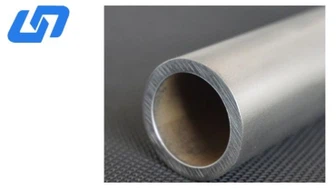
Medical Use Titanium
What is Titanium ?
Titanium materials have been used in everyday life for a long time. The 1930s were the beginning of modern biomedical functional materials. Initially, stainless steel was developed for use in medical and implant applications. An alloy made of cobalt is the second material. Titanium and its alloy became the newest generation of metallic biomaterials around the 1960s. Since its most memorable appearance, titanium has been portrayed as a wonder metal and has gotten broad considerations.
Why is titanium so unique?
Titanium is a transition metal that has high strength and low density. Under a variety of conditions, it resists corrosion. In particular, titanium is latent and resistant to body liquid and tissue. These are the purported biocompatibility and consumption obstruction. They are essential requirements for applications in medicine.
The fundamental properties of titanium, stainless steel, and cobalt-alloy are outlined in Table 1. The lowest density is 4.51 g/cm-3 for titanium, while the highest density is 8 g/cm-3 for stainless steel. Titanium has a much higher strength-to-density ratio of 76 kNm/kg for the same tensile strength. With a strength/density of 63 kNm/kg, it is 20% stronger than stainless steel. Titanium's elastic modulus value is only half that of cobalt-alloy and conventional stainless steel. It is significantly more like human bone. Additionally, titanium has low thermal expansion and conductivity, making it non-ferromagnetic.
Titanium and its composite have most helpful properties make them enormous outcome in muscular health, inserts, and careful instrument fields. Baoji city changsheng titanium co. ltd is a manufacturer and supplier of titanium and Cu-Ni metal mill and finished products in the most comprehensive range of grades, dimensions, and mill products.

The lowest prices and highest engineering standards for metals are offered to the market by baoji city changsheng titanium co. ltd, which is located in the heart of China's titanium production. Sure that we can't be bested on costs and quality we have presented our cost guarantee ensure. Titanium is the preferred choice of titanium and CuNi mill and finished product suppliers worldwide.
What is the density of titanium?
Because it is more challenging to extract, titanium metal is not as affordable as iron, so its applications tend to be specialized. The properties of titanium metal are extremely valuable. Similar to aluminum, it forms a thin protective oxide layer to prevent corrosion, making it practically inert. Because it has a density of 4.5 grams per cm3, which is significantly lower than that of iron, titanium alloys are important for the aerospace industry. It was used to make a lot of the SR-71 Blackbird, which was the fastest manned aircraft in the world. It was also used to make a lot of the engines and airframe of big passenger planes like Airbuses and 747s.
Because of its resistance to seawater, this metal is used in marine applications like propeller shafts. It is also said that the Russians used it to build submarines. Titanium isn't poisonous, and it isn't dismissed by the body. Because it also connects to bone, it has been used in surgical procedures like tooth implants and joint replacements, particularly hip joints.

Why is titanium used for implants?
The market for dental implants, which is estimated to be worth approximately USD 4.6 billion worldwide, opened the door to the possibility of restoring a patient's dental health and function [6]. Due to their biocompatibility and low cost, titanium implants are the most commonly used material on the market.
Titanium is a bioinert material, initiating practically no pernicious impact on the encompassing tissue. However, despite the material's description of a number of inherent advantages, it fails to integrate well with the bone and gingival tissue without adequate surface treatment, which may result in implant failure. Poor osseointegration is the cause of these failures, which affect the implant's stability in the bone and can result in the development of infections and inflammatory processes in the peri-implant space [7]. Different surface treatments to prevent the formation of harmful bacterial biofilms and improve osseointegration are being studied as a means of reducing these issues. Nanotechnology has created positive effects in dentistry, having the option to deliver surfaces with a particular geography and synthetic piece to work on the biocompatible qualities of materials.
Is surgical titanium magnetic?
Metal implants are particularly vulnerable to the risks of implant migration and radiofrequency (RF)-induced heating, both of which have the potential to harm the surrounding tissue because MRI machines use powerful magnets [11].
Implants that are securely fastened to the bone are not affected by MRI-induced displacement, according to studies [1,12]. Given the lack of ongoing examinations, X-ray isn't suggested in the prompt postoperative period in patients with uninvolved embeds like curls, channels, and stents [6]. Because the implant's eddy currents are parallel to the scanner's static magnetic field, RF heating is theoretically possible. In any case, all partner studies have uncovered that this temperature change is unimportant, demonstrating that worries about tissue harm from RF warming are unwarranted.
Image artifacts caused by metal implants can cause results to be misinterpreted. By optimizing scanning parameters and modifying magnetic resonance pulse sequences, technological advancements can reduce image distortion. Physicians must take into account the advantages of imaging as well as the possibility of implant-induced image distortion when deciding whether or not to perform MRIs on patients.
The MRI's magnetic field has no effect on titanium because it is a paramagnetic material. MRI can be used safely in patients who have implants because there is a very low risk of complications caused by implants. However, alloys are used to make the titanium plates that are used in the craniofacial area. Because the effects of MRI are influenced by the proportion of the alloy's constituents, more precise research is required.

Counterfeit joint and Clinical embed
Total populace is progressing in years. We want to live longer and live a very active life today. Sports-related, traffic-related, and other types of accidents all result in injuries. Clearly, the interest of counterfeit joint keeps on developing. Titanium and its composites have been usually used to manufacture embed gadgets, for example, bone plates, screws for fixing fractures, cardiac valve prostheses, pacemakers, and artificial hearts are all examples of artificial joints. Over 100 million patients worldwide receive replacement therapy annually, and over 1,000 tons of titanium are inserted into patients' bodies.
These metal implants need to be mechanically shaped in a certain way to keep their functions during use. During our daily activities, we bend, twist, squeeze, and contract our muscles. When subjected to loads of fatigue, abrasion, and impact, these artificial parts must not deteriorate. Titanium is 50% lighter than stainless steel and has a strength-to-density ratio that is 20% higher. It is stronger and lighter. At the point when embed inside human body, it will decrease body loads. Patients will be able to move around more freely. Between the artificial part and the human body, there will be tension. A mismatch in the elastic modulus is what leads to the so-called interface stress. From table 1, we can see that titanium has most minimal flexible modulus among these three materials. The titanium implant and human bone are much more mechanically compatible.
Physiologically, the body rejects unfamiliar parts. After implant surgery, clinical inflammation, redness, and itching are frequently experienced when stainless steel and co-alloy are used as biomaterials. Titanium and its alloys are well-known for their biological inertness. They are extremely resistant to corrosion in human blood's immersion environment. It opposes human blood and cell tissue well overall, guaranteeing great similarity. There is practically no contamination and unfavorably susceptible responses, which extraordinarily works on the patients' recuperation. Titanium's numerous applications are based on this.
Because of its superior biocompatibility, commercially pure titanium (Cp Ti) is generally regarded as the best candidate. However, the ELI alloys Ti-6Al-7Nb, Ti-13Nb-13Zr, Ti-12Mo-6Zr, and Ti-6Al-4V are also utilized extensively in medical implants. Actually take a look at our site to ask about our different items!
Equipment for orthopedics The treatment of bone deformities is the primary focus of orthopedics. To help the twisted body return to its normal position, external force is required. Muscular health hardware ought to give solid supporting and recall the right state of the body. Other than wear obstruction and erosion opposition, the novel property expected here is shape memory. Shape memory alloys made of titanium and nickel possess both high strength and memory properties. Ti-Ni alloy is currently used to make common bone plates, intramedullary nails, mandibular internal fixation, scoliosis correction, and other similar devices.
Dental implants have their own distinct characteristics. There are three sorts of dental embed: zygomatic, osseointegrated, and a mini-implant for orthodontic anchorage. Titanium has been utilized as crowns, crown nails, fixed spans, porcelain spans, cement spans, dental replacement holding rings, bases, interfacing gadgets and fortifying gadgets. Titanium has been used to cover nearly every metal component of dentures.
Let's begin with standard osseointegration. A "root," or "seed," will first be inserted into the jaw bone by a doctor. After it settles down, the superstructure of the tooth will bond with the embed. After that, a new tooth will develop on top of it. Here is the contrast between clinical embed and dental embed. A medical implant is either a "glue" or "screw" used to connect broken hard tissue or a replacement for damaged hard tissue. In any case, dental embed assisted new design with developing. How intriguing!
This "simple" procedure necessitates excellent thermal and biocompatibility properties. While drinking soup and eat frozen yogurt individuals will feel hot and chilly, however these sentiments are from the mouth not the teeth. There won't be any stimulation for healthy teeth.
Titanium expands very little when heated. At the point when titanium-based embed utilized as a "root", it will not grow or shrivel inside individuals' mouth. The recently framed tooth will remain where it ought to be. Titanium has a thermal conductivity of only one-fifth that of stainless steel, one-third that of aluminum, and half that of copper. It will not adhere to the structure of the actual teeth when used as a crown. The dental pulp can be shielded from heat and cold stimulations by titanium.
Precision casting titanium is used in dentistry because it has high dimensional accuracy, no shrinkage, and no bubbles. As of now, 4 financially unadulterated titanium (Cp Ti) are uniquely utilized for dental embed applications. They range in ASTM grade from 1 to 4. They all have low degree of electronic conductivity, high erosion opposition, thermodynamic state at physiological pH values, low particle arrangement propensity in fluid conditions and isoelectric point of the oxide of 5-6.
Purity decreases and strength increases between grades 1 and 4. Grade 2 titanium is the most well known star for dental embed applications. It has least yield strength of 275 MPa which is equivalent to tempered austenitic hardened steels. When require higher strength, titanium combination can likewise be applied. Other alloys, such as Ti-6Al-4V, are also utilized in a variety of contexts.
Surgical instruments
The first generation of surgical instruments were made of carbon steel, but their performance was not up to par with that of clinical use after electroplating. Frequently lead to infection. Second-generation stainless steel is austenitic, but the chromium content is toxic and has some effects on the body.
Mechanical properties and ductility are the first things that need to be taken into consideration when making surgical instruments. The metal priority a specific flexibility to keep up with required shape without surrenders. Scalpels, tweezers, and scissors are examples of basic surgical instruments that are long and thin. The instrument requires a certain amount of strength to operate safely. They should be sufficiently intense and not to break during a medical procedure. For surgical instruments, the minimum required modulus is 100 GPa. The modulus of titanium is 116 GPa.
During medical procedure activity, instruments straightforwardly presented to living tissue. It is necessary to have corrosion resistance, biocompatibility, and magnetic properties. Titanium is non-poisonous to human tissue. It won't bring on any insusceptible reaction. The operating room occasionally experiences magnetic fields. For instance, X-ray creates an attractive field of around 1.5 Tesla. This attractive field can influence careful instruments in different ways, including: harmful motion brought on by the interaction of magnetic fields (the missile effect), instrument heat caused by the deposition of radio frequency (RF) power, and instrument-related photography Titanium is non-attractive, dependable wellbeing of activity. Because it is non-magnetic, it also eliminates the possibility of causing harm to delicate electronic implants.
Sterilization is carried out using a hot steam spray at a high temperature following surgery. Different cleansers are utilized to clean microbes and diseases. The instrument's size and surface quality should not change after repeated cleanings. Additionally, there should be little damage. Every time a surgeon uses an instrument, they need it to work correctly. The resistance to corrosion of titanium and titanium alloys is excellent. Last but not least, titanium's low weight makes it ideal for microsurgery. The work temperature can range anywhere from 150 to 500 degrees Celsius. Surgeon fatigue can be reduced by using lightweight surgical instruments, especially for lengthy procedures.
Medical titanium and titanium alloys are high-quality metals that are frequently utilized in medical equipment. Laser cathodes, dental drills and forceps are frequently produced using titanium.
Baoji City Changsheng Titanium Co., Ltd. is a leading manufacturer and supplier that provides individualized solutions for a wide range of applications. We collaborate closely with you at every stage of the manufacturing process to ensure that the final product meets your requirements. Contact us or request a quote right away to learn more.
References:https://www.rsc.org/periodic-table/element/22/titanium
https://www.ncbi.nlm.nih.gov/pmc/articles/PMC9104688/
https://www.ncbi.nlm.nih.gov/pmc/articles/PMC6369045/