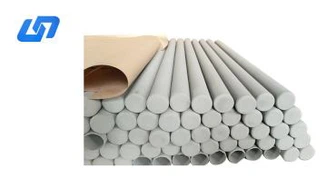
Titanium anode for metal plating
Titanium anode for metal plating
Principle: Electrolysis
Role: Improve abrasion resistance, corrosion resistance, increase hardness, improve conductivity, smoothness, heat resistance and surface aesthetics
Category: Protective plating + decorative plating
Factors affecting working quality (working conditions):
Anode quality
Composition of plating solution
3. Temperature
4. Current density:
5. Electrolysis time
6. Stirring intensity
7. Precipitated impurities
8. Power supply waveform, etc.
Six elements of electroplating bath: main salt, additional salt, complexing agent, buffering agent, anode activator and additives
The electroplating process is a process in which metal ions in a plating solution are reduced to metal atoms by an electrode reaction under the action of an external electric field, and metal deposition is performed on a cathode.
The principle of electroplating is simply that in a salt solution containing the metal to be plated, the substrate metal to be plated is used as the cathode, and the cations of the metal to be plated in the plating solution are deposited on the surface of the substrate metal by electrolysis to form a coating.
Elements of electroplating: 1. Cathode: The object to be plated refers to various connector terminals. 2. Anode: If it is a soluble anode, it is the metal to be plated. In the case of insoluble anodes, most are precious metals (platinum, iridium oxide). 3. Electroplating potion: Electroplating potion containing metal ions to be plated. 4. Electroplating tank: A tank that can bear and store electroplating chemicals, generally considering strength, corrosion resistance, temperature resistance and other factors. 5. Rectifier: A device that provides DC power.