Titanium anode for electrodialysis wastewater desalination
Titanium anode for electrodialysis wastewater desalination
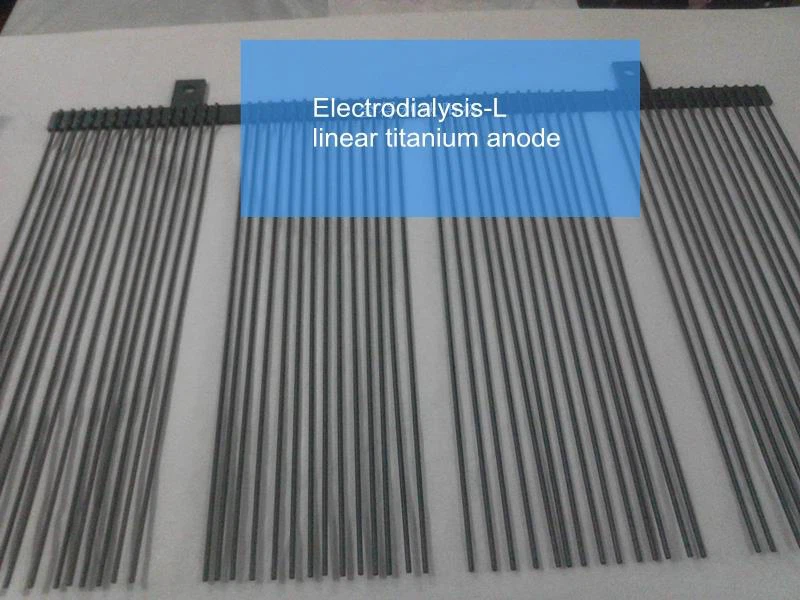
Electrodialysis is a physical and chemical process that uses the selective permeability of an ion exchange membrane to move ions from one part of water to another under the action of an external DC electric field. The electrodialysis desalination device is to use the electrodialysis process in the multilayer compartment to achieve the purpose of demineralizing water. The application of electrodialysis in wastewater treatment projects is mainly the desalination of wastewater and the recovery and utilization of useful substances. In some biochemical wastewater, the COD and salt content are very high. When these wastewaters are treated by biochemical methods, bacteria cannot grow because of high concentration of salt. Therefore, these wastewaters can be desalted with an electrodialyser to reduce the salt content before biochemical treatment. Recyclable inorganic salts can be recycled by electrodialysis. The precious metal oxide ruthenium-iridium-coated titanium anodes we produced are available in plate, tube, and mesh types for users to choose, with reasonable prices and reliable quality. The titanium matrix is reusable. Electrodialysis can also be used for the treatment of wastewater, waste liquid and the recovery of precious metals, such as nickel from electroplating waste liquid. Synthesizing the application of the above electrodialyzer, the titanium anode is the core component of the electrodialyzer, and its quality is particularly important.