


Ruthenium iridium coated titanium anode
Substrate: Pure titanium ASTMB265-Gr1
Coating: ruthenium-based, iridium-based, platinum (selected according to the environment and life requirements of the electrode provided by the customer)
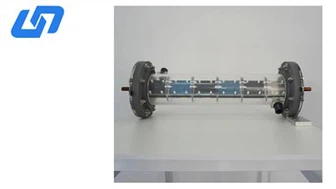
Electrodialysis: Desalting / desalting (selective permeability of ion membrane)
Operating pressure: 0.5 ~ 3.0kg / cm2
Current voltage 100 ~ 250V, 1 ~ 3A
Product Introduction
Product Description
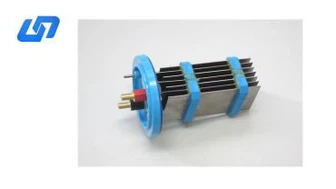
Ruthenium–iridium coated titanium anodes are dimensionally stable anodes (DSA) manufactured by coating high-purity titanium substrates with a catalytic mixed metal oxide layer containing ruthenium oxide (RuO₂) and iridium oxide (IrO₂).
The titanium base provides excellent mechanical strength and corrosion resistance, while the Ru/Ir coating provides outstanding electrochemical catalytic activity and conductivity.
These anodes are widely used in electrochemical water treatment, desalination, electrodeposition, and industrial wastewater treatment.
Structure & Manufacturing Technology
Base Material: ASTM B265 Grade 1 Titanium
Coating Materials:
Ruthenium-based oxide
Iridium-based oxide
Platinum-based coating (optional depending on environment)
Manufacturing methods include:
Thermal decomposition coating
Electrochemical deposition
Advanced surface catalytic coating processes
The result is a highly stable electrode with long operational life and excellent performance stability.
Technical Specifications
| Parameter | Specification |
|---|---|
| Substrate | Pure Titanium (ASTM B265 Gr1) |
| Coating Type | Ru-based / Ir-based / Ru-Ir mixed oxide |
| Operating Pressure | 0.5 – 3.0 kg/cm² |
| Operating Voltage | 100 – 250 V |
| Current Range | 1 – 3 A |
| Fresh Water Energy Consumption | 0.2 – 2.0 kWh per ton |
| Electrode Operation | Suitable for both oxidation and reduction environments |
(Custom specifications available.)
Performance Advantages
Excellent corrosion resistance in acidic, alkaline, and high-salinity environments
High electrical conductivity and low electrode potential
Stable electrochemical performance
Strong anti-fouling properties
Long service life with low maintenance cost
High current efficiency
Compared with traditional electrodes, Ru/Ir titanium anodes offer significantly improved durability and energy efficiency.
Working Principle in Electrochemical Systems
Ruthenium–iridium titanium anodes function as the oxidation electrode in electrochemical systems:
Provide electrons required for oxidation reactions
Promote ion migration through ion exchange membranes
Maintain stable current density during operation
The catalytic coating minimizes energy loss and improves reaction efficiency.
Applications
Seawater & Brackish Water Treatment
Electrodialysis desalination
Ion exchange membrane systems
Industrial Wastewater Treatment
Chemical wastewater oxidation
Pharmaceutical wastewater treatment
Textile dyeing wastewater purification
Environmental Engineering
Disinfection systems
Hospital wastewater treatment
Coking wastewater treatment
Industrial Electrochemical Processes
Electrodeposition
Electrolysis systems
Hydrogen production systems
Infrastructure Protection
Water heater corrosion protection
Cooling water circulation systems
Oilfield reinjection water treatment
Desalination Application Advantages
In electrodialysis desalination systems:
Provides stable potential and current density
Resists corrosion under extreme pH and salinity conditions
Reduces membrane fouling risk
Improves desalination efficiency
Reduces operational cost
Service Life
Expected service life: 3 – 8 years (depending on operating conditions and current density)
Hot Tags:
You Might Also Like



Send Inquiry
