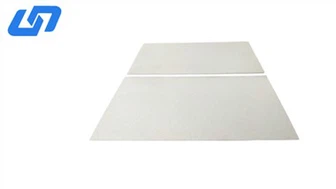
What are Titanium Sheets?
Titanium, also known as the "wonder metal," has gained immense popularity in various industries due to its exceptional properties. From aerospace to medical, titanium has found its way into a wide range of applications. One form in which titanium is commonly used is titanium sheets. In this blog, we will explore the world of titanium sheets, understanding their composition, properties, and their significance in different sectors.
Composition and Manufacturing Process of Titanium Sheets
Titanium sheets are made from titanium plates, which are flat, rectangular pieces of titanium. The manufacturing process involves various steps to make sure the desired strength and quality. Firstly, pure titanium is extracted from mineral deposits and then transformed into a titanium sponge. This sponge is then melted using the Kroll process, which involves reacting titanium tetrachloride with magnesium in a high-temperature furnace. The resulting titanium ingot is continuously heated and rolled to achieve the desired thickness and size. The final product is a titanium sheet with exceptional strength and durability.
Properties and Advantages of Titanium Sheets
Titanium sheets have several unique properties that make them highly sought-after in different industries. One of the key advantages of titanium sheets is their superior strength-to-weight ratio. Titanium is about 50% lighter than steel, yet it is as strong as steel, making it ideal for applications where weight is a critical factor. Additionally, titanium sheets exhibit excellent corrosion resistance, even in challenging environments such as saltwater or acidic solutions. This property, along with their biocompatibility, makes titanium sheets widely used in the medical field for surgical implants and instruments. Furthermore, titanium sheets have excellent heat resistance, electrical conductivity, and low thermal expansion, making them suitable for aerospace components, chemical processing equipment, and more.
Applications of Titanium Sheets
The versatility of titanium sheets allows them to be used in a diverse range of applications. In the aerospace industry, titanium sheets are used for manufacturing plane components such as wings, fuselage panels, and engine parts. The exceptional strength and lightweight nature of titanium sheets significantly contribute to fuel efficiency and increased flight performance. In the medical field, titanium sheets are used for orthopedic implants, dental implants, and surgical instruments, Thanks to their biocompatibility and resistance to corrosion. Additionally, titanium sheets find applications in the marine industry for constructing ships, submarines, and offshore platforms, where their corrosion resistance is crucial.
In conclusion, titanium sheets are a valuable form of titanium that offer exceptional strength, lightweight characteristics, corrosion resistance, and various other properties. The composition and manufacturing process of titanium sheets makes sure that they are of superior quality and meet industry requirements. The wide range of applications they serve in the aerospace, medical, and marine industries showcases their versatility and importance. Whether it's for creating durable aircraft parts or life-changing medical devices, titanium sheets have undoubtedly revolutionized numerous sectors by offering unmatched reliability and performance.