DSA Titanium Metal Anode Introduction
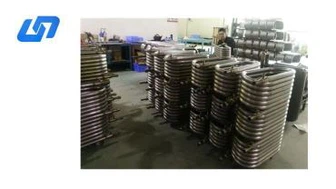
DSA is the abbreviation of English dimension stable anode, which means dimensionally stable anode. DSA anode generally refers to coated titanium anode, which is a double-layer cladding structure. Titanium metal is used as a conductive substrate, and the substrate is coated with a coating capable of catalyzing the electrochemical reaction. DSA anode has the advantages of excellent electrocatalytic activity and chemical stability, low anode overpotential, insensitivity to changes in current density, maintenance-free, no pollution, and particularly long service life. In the electroplating industry, it can be used as anode for galvanizing, copper plating, trivalent chromium plating, etc.

The titanium metal anode advantages are as follows:
1. Titanium anodes have a long working lifetime. In the diaphragm electrolysis ofchlor-alkali industry, titanium anodes are resistant to chlorine and alkali corrosion. The anode lifetime has reached more than 6 years, while graphite anodes are only 8 months.
2. It can overcome the problem of dissolution of graphite anode and lead anode, avoid the pollution of electrolyte and cathode products, and thus improve the purity of metal products.
3. It can increase the current density. In the production of chlor-alkali by the diaphragm electrolysis method, the working current density of the graphite anode is 8A / dm2, but the titanium anode can be multiplied to 17A / dm2. In this way, under the same conditions of the electrolytic plant and the electrolytic cell, the output can be doubled, increasing The single slot production capacity effectively improves labor production efficiency. For electrolysis at high operating current density, titanium anodes are more suitable.
4. Due to the use of metal anodes, high temperature and high current density operation of chlorate electrolytic cells becomes possible. The use of titanium metal anodes improves the structure of the electrolytic cell, reduces power consumption, and accelerates the chemical reaction from hypochlorite to chlorite, thereby improving production performance.
5. Using DSA, the design concept and operating conditions of the mercury electrolyzer and diaphragm electrolyzer are improved, and the energy consumption is reduced. The low overpotential characteristic of DSA, the bubbles between the surface of the electrode are easily eliminated, it is an important reason for the voltage drop of the metal anode electrolytic cell.
Because of its many advantages, the development of titanium anodes has made the chlor-alkali industry a great economic benefit, so it was soon popularized around the world. Chlor-alkali production capacity is about 41 million tons / year worldwide. The use of titanium anodes is not less than 70%. Titanium anodes are known as a major technological revolution in the chlor-alkali industry. Subsequently, titanium anodes have also been widely used in many electrolytic industries.
6. The size of the anode is stable, and the distance between the electrodes does not change during the electrolysis, which can ensure that the electrolysis operation is performed under the condition that the tank voltage is stable.
7, Metal anode can avoid the short-circuit problem after the lead anode deformation, so it can improve the current efficiency.
8. The titanium anode is light in weight, which can reduce labor intensity.
9. The switch is easy to manufacture and can be highly accurate.
10. The working voltage is low, so the power consumption is small, which can save power consumption, and the DC power consumption can be reduced by 10% to 20%. The main reasons for the low working voltage of titanium anodes are: 1) The overpotential of titanium anodes with active coatings to chlorine and oxygen is relatively low. In the electrolytic production of chlor-alkali from saline water, the titanium anode has a lower overpotential to chlorine, which is 140 mV lower than the graphite anode at 1 A / cm2; 2) The "bubble shielding effect" can be reduced. The bubbles between the electrode are small and can be broken away quickly. The intergassing degree between the electrode is greatly reduced, the ohmic drop between the two electrodes is about 700mV, and the bubble diameter is about 3mm; 3) the resistance of the anode structure is reduced; 4) the distance between the electrodes is shortened.
In the 1960s, the annual electricity consumption of the salt electrolysis industry around the world was about 150 billion kWh. After using metal anodes, it could save about 300 million kWh of electricity each year.
11. In the production of chlor-alkali, after using titanium anode, the product is high quality, high purity of chlorine gas, does not contain CO2, and high alkali concentration, which can save heating steam and energy consumption.
12, strong corrosion resistance, can work in many corrosive, special electrolytic media with special requirements.
13. The base metal titanium products can be used repeatedly.
14. The emergence of metal anodes has enabled the design and industrialization of the latest ion membrane electrolysis technology that has recently used in the chlor-alkali industry.