

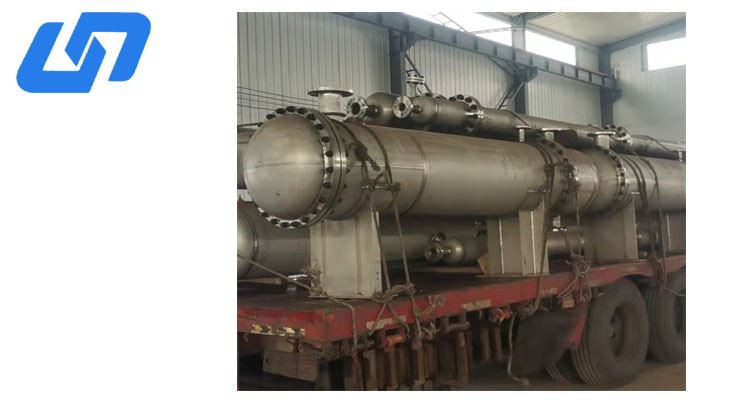
Seawater Desalination Equipment Introduction
Freshwater accounts for about 3% of the earth's water resources. Obtaining new freshwater resources through desalination is a major trend in the world's water use in the future. Among the many methods to solve the shortage of freshwater resources in coastal areas, seawater desalination is a practical and effective method. Among them, multi-stage flash (MSF) desalination technology occupies a dominant position, and its production capacity is full 56% of the world's total desalination production.
Product Introduction
Seawater desalination has become a primary solution for freshwater supply in water-scarce regions such as the Middle East. Among various technologies, the multi-stage flash (MSF) evaporation process is one of the most reliable and widely used methods.
This system includes key components such as:
Seawater heaters
Heat recovery condensers
Brine heaters
Vent condensers
Jet compressors
A critical part of these systems is the heat exchange section, which relies heavily on high-performance tubing and plates.
Why Titanium Replaces Traditional Materials
Originally, copper alloy tubes were widely used in desalination equipment. However, due to poor corrosion resistance in seawater, they have largely been replaced by titanium.
Key Advantages of Titanium:
Exceptional resistance to seawater corrosion and chloride ions
High resistance to stress corrosion cracking
Excellent mechanical strength-to-weight ratio
Long service life with minimal maintenance
Strong resistance to chlorine and oxidizing environments
Titanium Grades for Desalination Applications
Different components require different titanium grades:
Plate Heat Exchangers:
Gr1 (ASTM Grade 1)
Best ductility
Excellent corrosion resistance
Ideal for plate-type heat exchangers
Tubular Heat Exchangers:
Gr2 (ASTM Grade 2)
Most widely used
Balanced strength and corrosion resistance
Enhanced Corrosion Resistance:
Gr7 (Ti-Pd alloy)
Gr12 (Ti-Mo-Ni alloy)
Gr16 (Ti-Pd)
Used in high-temperature or highly aggressive environments
Higher cost but superior durability
Application in MSF Desalination Systems
In MSF systems:
Titanium tubes are used in:
Flash evaporators
Brine heaters
Condensers
Titanium plates are used in:
Plate heat exchangers
Performance Characteristics:
Seawater flow velocity: 3–5 m/s (optimal)
Fouling coefficient: ~0.95–0.99 (low scaling tendency)
Long-term stability in high salinity and high temperature environments
Titanium Plate Heat Exchanger Series
Titanium plate heat exchangers are widely used in:
Chemical industry
Petrochemical plants
Marine engineering
Seawater desalination systems
Typical Models:
BR Series: BR02, BR035, BR046, BR080, BR10
BBR Series: BBR06, BBR08, BBR10
Example: BR035 Plate Heat Exchanger
Heat transfer area (per plate): 0.35 m²
Plate thickness: 0.8 mm
Heat transfer coefficient: 2500–5000 W/(m²·℃)
Max flow rate: 120 m³/h
Working pressure: ≤1.6 MPa
Temperature Limits (depending on gasket):
Nitrile rubber: ≤120°C
EPDM: ≤180°C
Fluororubber: ≤250°C
Engineering & Economic Benefits
Using titanium in desalination systems provides:
Extended equipment lifespan
Reduced downtime and maintenance
Improved operational reliability
Lower lifecycle cost
Higher efficiency in heat transfer systems
Additionally, titanium-clad steel plates are often used to:
Reduce material cost
Maintain structural strength
Ensure corrosion resistance
Hot Tags:
You Might Also Like


Send Inquiry
