

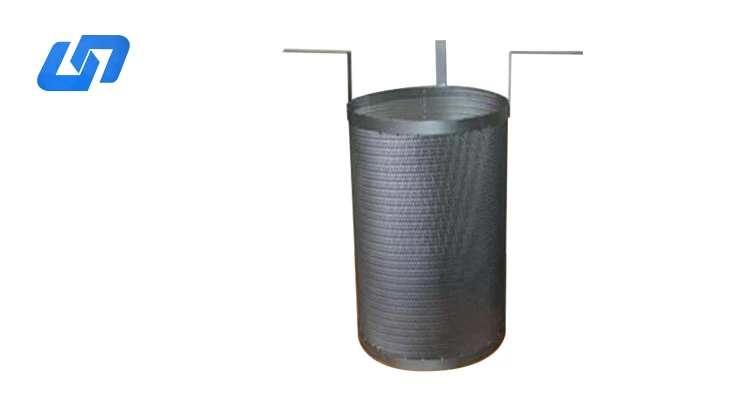
Titanium Anode Basket & Electrocatalytic Wastewater
Titanium anode basket materials: titanium mesh/ titanium plate
Thickness of the titanium plate ranges :from 0.5 to 2 mm.
The common mesh size of titanium mesh: 3 * 6mm/4 * 8mm / 4.5 * 12.5mm.
Product Introduction
Titanium anode baskets are manufactured from high-quality titanium mesh formed from titanium plates with thickness ranging from 0.5–2.0 mm. Designed for excellent corrosion resistance and long service life, they are widely used in electroplating, wastewater treatment, electrolysis systems, and chemical processing industries.
The titanium substrate can be coated with MMO coatings or supplied uncoated depending on application requirements.
Titanium Anode Basket Specifications
Item | Specification |
Material | Pure Titanium (Gr1 / Gr2) |
Plate Thickness | 0.5 – 2.0 mm |
Mesh Sizes | 3×6 mm / 4×8 mm / 4.5×12.5 mm |
Types | Round / Rectangular / Dish-shaped |
Surface | Coated or Uncoated |
Customization | Available according to drawings or requirements |
Key Features
Excellent corrosion resistance
Long service life in harsh electrolytic environments
Lightweight and high strength
Stable conductivity performance
Reusable titanium substrate
Custom shapes and dimensions available
Applications
Electroplating hangers and plating lines
Chrome plating production lines
Swirl electrolysis systems
Electrocatalytic wastewater treatment
Chemical and environmental protection industries
Titanium Anode for Electrocatalytic Wastewater Treatment
Technology Overview
Electrocatalytic electrolysis is an advanced green water treatment technology that removes pollutants through electrochemical oxidation and reduction reactions without adding chemical agents.
Compared with traditional treatment methods, electrolysis technology:
Occupies less space
Produces no secondary pollution
Has high treatment efficiency
Requires low chemical consumption
Is suitable for difficult-to-degrade wastewater
Working Principle
1. Direct Electrolysis
Pollutants are directly oxidized or reduced on the electrode surface.
Anode Process
Organic pollutants are oxidized into:
Less toxic substances
Biodegradable compounds
CO₂ and water
Cathode Process
Used for:
Dehalogenation of organic compounds
Heavy metal recovery
2. Indirect Electrolysis
Electrochemically generated oxidants react with pollutants, including:
Hypochlorite
Hydrogen peroxide (H₂O₂)
Ozone (O₃)
Hydroxyl radicals (•OH)
These strong oxidants effectively decompose refractory organic pollutants.
Advantages of Electrocatalytic Electrolysis
No chemical additives required
No secondary pollution
Compact equipment design
High COD removal efficiency
Stable operation and easy maintenance
Effective for non-biodegradable wastewater
Anode Structure Options
Available in multiple structures:
Plate type
Tube type
Mesh type
All titanium substrates are reusable and designed for long-term operation.
Typical Wastewater Applications
Successful applications include:
Electroplating wastewater
Coking wastewater
Organic wastewater
Ammonia nitrogen wastewater
Printing & dyeing wastewater
Landfill leachate
Oily wastewater
Cyanide wastewater
Oilfield reinjection water
Hospital wastewater
Metal recycling wastewater
Food & catering wastewater
Why Choose Titanium MMO Electrodes
Outstanding corrosion resistance
High electrocatalytic activity
Long operating life
Reliable performance under high current density
Ideal for modern environmental protection systems
Environmental Solution
Electrocatalytic electrolysis technology is becoming a key solution for:
Industrial wastewater recycling
Zero-liquid-discharge systems
Green chemical processing
Sustainable environmental engineering
Hot Tags:
You Might Also Like




Send Inquiry
