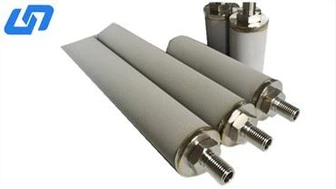
Basic knowledge and application of titanium anode
1- What is titanium anode?
The titanium anode is called a titanium-based metal oxide coated titanium anode (MMO). Also called DSA anode (Dimensionally Stable Anodes).It uses titanium as the substrate and brushes the precious metal coating on the titanium substrate to make it have good electrocatalytic activity and electrical conductivity.
2- Classification of titanium anodes
Titanium anodes is classified according to gas released from the solution by the anode in the electrochemical reaction. If it is chlorine, we call it chlorine evolution anodes,such as ruthenium-coated titanium electrode.If it is oxygen, we call it oxygen evolution anodes , such as iridium coated titanium electrode and platinum-titanium mesh/plate anode.

Chlorine evolution anodes (ruthenium series coated titanium anode): high Chloride ion contained in electrolyte, common exist in hydrochloric acid environment and electrolytic seawater, electrolytic salt water environment,such as ruthenium-iridium titanium anode, ruthenium-iridium tin-titanium anode.
Oxygen evolution anodes (iridium series coated titanium anode): electrolyte is generally sulfuric acid environment. Common use iridium tantalum titanium anode, iridium tantalum tin titanium anode and high purity iridium coated titanium anode.
Platinum plated titanium anode (Platinum coated titanium mesh/platinum titanium plate): titanium as substrate, plated with the precious metal platinum. The plating layer is 0.5-5 um commonly. The dimond of the mesh is 3*6mm, 4*8mm and 12.5*4.5mm.

3- The advantages of titanium anode.
Our coating technology is brush.Titanium anodes has more advantages than other meterials.
1> The dimension of titanium anode is stable and the distance between electrodes does not change during electrolysis, which can ensure that electrolysis operatio n can be carried out under the condition of stable tank voltage.
2> Low working voltage, low power consumption, dc power consumption can be reduced by 10-20%
3> Titanium substrate anode has excellent anti-corrosion, can work longer.
4> Compared with graphite anode and lead dioxide anode, it can overcome the dissolution when working. Also avoid the contamination of electrolyte, inhance the purity of cathodic products.
5> High current density, low overpotential, high catalytic activity of electrode, can effectively capture high production efficiency.
6> It can avoid short circuit after lead dioxide anode deformation and improve current efficiency.
7> Shape making is easy and can be made with high precision.
8> Titanium substrate can be recyclable .
9> With low overpotential characteristics, bubbles on the surface between electrodes and electrodes can be easily removed, which can effectively reduce the electrolytic cell voltage.

4- Comparation with lead alloy anodes.
In electrolytic metallurgy, it can replace the conventional lead alloy anode, under the same conditions, the voltage can be reduced, and the power consumption can be saved. For example, electrolysis of zinc has always used a lead alloy anode containing a small amount of silver, strontium or calcium. It offen exist problems: the lead alloy electrode is unstable in size; the oxygen evolution potential is too high (about 800mV); Corrosion occurs when the anode is polarized; lead ions are dissolved in the electrolyte, deposited on the cathode, contaminating the metal zinc, affecting product quality . Titanium anodes for electrowinning metals can overcome the drawbacks of lead alloy anodes, and are suitable for high current density operation and narrow pole spacing electrical conditions; not only for sulfate systems, but also for chlorine salt system, sulfate and chloride mixture system.
5- More information about titanium anodes, please click below links;