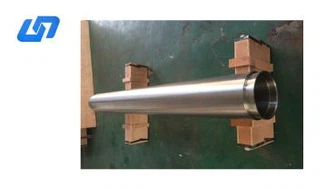
What makes Nitinol so special
Introduction:
Nitinol, a unique alloy of nickel and titanium, has captivated scientists, engineers, and medical professionals for its exceptional properties and versatile applications. Its shape memory effect, superelasticity, biocompatibility, and corrosion resistance make Nitinol a truly special material. This article explores the fascinating characteristics of Nitinol, its diverse uses across industries, and sheds light on why it stands out as a remarkable alloy.
Section 1: Understanding Nitinol
Nitinol derives its name from its constituents, Nickel (Ni) and Titanium (Ti). It belongs to the family of shape memory alloys (SMAs), which exhibit the ability to "remember" their original shape following deformation. The shape memory effect in Nitinol arises due to a reversible phase transformation between austenite and martensite phases, which occurs in response to temperature changes or mechanical stress.
Explanation:
To understand the unique properties of Nitinol, it is important to delve into its composition and structure. Nitinol is an intermetallic compound composed of approximately 50% atomic nickel and 50% atomic titanium. This specific combination of elements gives Nitinol its distinct characteristics, such as the shape memory effect and superelasticity.
The shape memory effect in Nitinol is a phenomenon where the material can recover its original shape after being deformed. When Nitinol is exposed to high temperatures, it undergoes a reversible phase transformation from austenite (high-temperature phase) to martensite (low-temperature phase). This transformation allows Nitinol to "remember" its original shape and return to it when heated or subjected to stress.
Section 2: Versatile Applications of Nitinol
2.1 Biomedical and Healthcare Applications:
Explanation:
Nitinol's exceptional properties and biocompatibility make it highly suitable for various medical and healthcare applications. Biomedical engineers leverage Nitinol's shape memory effect and superelasticity to develop innovative devices that cater to patient needs, reduce invasiveness, and improve overall treatment outcomes.
Orthodontic archwires made from Nitinol are widely used in dentistry. These wires apply gentle continuous forces to shift teeth into proper alignment, taking advantage of Nitinol's ability to maintain its shape while exerting controlled pressure on the teeth.
Nitinol stents have revolutionized cardiovascular interventions. Stents are inserted into narrowed or blocked blood vessels to restore blood flow. Nitinol's superelasticity allows the stent to be compressed during delivery and then expand to its original shape within the vessel, ensuring a secure fit and reducing the risk of complications.
In surgical instruments and guide wires, Nitinol's superelasticity and shape memory effect provide flexibility, precision, and control during minimally invasive procedures. Nitinol's ability to bend and regain its original shape allows for less invasive incisions and faster recovery time for patients.
2.2 Aerospace and Engineering Applications:
Explanation:
Nitinol's remarkable properties find extensive applications in aerospace engineering, where materials must withstand challenging environments and exhibit excellent performance.
Nitinol actuators are used in aerospace applications for precise and efficient control systems. These actuators take advantage of Nitinol's shape memory effect to provide accurate positioning and actuation in response to temperature changes. They are essential in mechanisms such as engine control, wing flaps, and landing gear systems.
Aircraft components made from Nitinol, such as couplings and connectors, benefit from its corrosion resistance and high strength-to-weight ratio. Nitinol's ability to withstand harsh conditions, including extreme temperatures and vibrations, makes it ideal for critical aerospace applications.
Nitinol's unique properties also make it suitable for adaptive structures and shape-changing devices. In aerospace applications, this allows for advanced designs that can change shape based on external stimuli, enhancing aerodynamic performance and efficiency.
2.3 Consumer Goods and Robotics:
Explanation:
Nitinol's exceptional properties extend beyond the medical and aerospace fields, finding applications in consumer goods and robotics.
Eyeglass frames made from Nitinol offer superior flexibility and durability compared to traditional materials. They can withstand accidental bending without permanent deformation, providing a longer lifespan for eyewear.
Mobile phone antennas incorporating Nitinol exhibit enhanced signal reception due to their elasticity and resilience. Nitinol's ability to deform and recover its original shape makes it ideal for antennas that need to adapt to different conditions.
Watch springs made from Nitinol provide self-winding capabilities, ensuring accurate timekeeping. The shape memory effect allows the spring to store energy during normal movement and release it when needed, eliminating the need for manual winding.
In robotics, Nitinol actuators offer precise and controlled movements, enabling the development of more dexterous and lifelike robotic systems. The shape memory effect allows for compact designs and efficient energy usage, making Nitinol a valuable material in the field of robotics.
Section 3: Advantages of Nitinol over Steel
3.1 Shape Memory Effect:
Explanation:
One of the most significant advantages of Nitinol over steel is its shape memory effect, which offers unique capabilities in various applications.
While steel retains permanent deformation when subjected to stress, Nitinol can undergo substantial deformation and recover its original shape when heated above its transformation temperature. This property gives Nitinol a distinct advantage in industries where materials with shape memory are required, such as medicine, aerospace, and robotics.
The shape memory effect allows Nitinol to be deformed and return to its programmed shape repeatedly without any degradation in performance. This ensures increased durability, resilience, and reliability in applications that involve cyclic loading and repeated shape changes.
3.2 Superelasticity:
Explanation:
Nitinol's superelasticity is another notable advantage over steel. This property sets it apart in applications requiring materials that can endure significant strain and recover their original shape.
In contrast to traditional materials like steel, Nitinol can withstand high levels of deformation (up to 8%) and return to its original shape upon the removal of the applied stress. This unique characteristic makes Nitinol highly suitable for dynamic applications where repeated deformation occurs, such as biomedical implants, aerospace components, and robotics.
Nitinol's superelasticity allows devices and structures to flex, twist, and bend without undergoing permanent deformation, providing excellent fatigue resistance and prolonged lifespan.
3.3 Biocompatibility:
Explanation:
Nitinol's biocompatibility is a crucial advantage, particularly in medical and healthcare applications. The compatibility of Nitinol with human tissues, combined with its other exceptional properties, makes it an ideal material for implants, orthopedic devices, and dental instruments.
Nitinol exhibits excellent corrosion resistance, preventing degradation in physiological environments. Its non-toxic nature ensures minimal adverse reactions when implanted in the body.
The biocompatibility of Nitinol extends to its ability to integrate with surrounding tissues, minimizing the risk of rejection and improving patient safety. Its mechanical properties also play a vital role in reducing trauma during surgical procedures, enabling faster healing and recovery times.
3.4 Corrosion Resistance:
Explanation:
Nitinol demonstrates excellent corrosion resistance, making it suitable for applications in harsh environments, including physiological conditions and marine settings.
Nitinol forms a thin, self-passivating oxide layer on its surface when exposed to oxygen or moisture, protecting it from corrosion and degradation. This inherent resistance to corrosion ensures the longevity and reliability of Nitinol-based devices, particularly in medical implants, marine components, and other critical applications.
The ability to maintain its structural integrity and performance over extended periods in corrosive environments makes Nitinol an advantageous alternative to traditional materials like steel, which may require additional coatings or protection to withstand similar conditions.
Section 4: Challenges and Future Advances in Nitinol
Explanation:
While Nitinol possesses extraordinary properties, there are ongoing challenges in its manufacturing processes and opportunities for further advancements.
Achieving precise control over Nitinol's phase transformation and optimizing material properties remain areas of active research. Researchers aim to enhance the fatigue life of Nitinol, improve its thermal stability, and further optimize its biocompatibility for advanced medical applications.
Advancements in processing techniques, such as heat treatment and alloy composition refinement, can contribute to the development of Nitinol with tailored properties for specific applications. In addition, ongoing research explores the incorporation of other elements into the Nitinol alloy to enhance specific characteristics or introduce new functionalities.
Further studies and innovations in Nitinol manufacturing, alloy design, and surface treatments hold promising potential for expanding its applications and pushing the boundaries of its capabilities.
Conclusion:
Nitinol, with its unique shape memory effect, superelasticity, biocompatibility, and corrosion resistance, has revolutionized numerous industries. Its remarkable properties have enabled the development of innovative medical devices, aerospace components, consumer goods, and robotics. Ongoing research and technological advancements continue to push the boundaries of Nitinol's capabilities, paving the way for exciting future applications.