


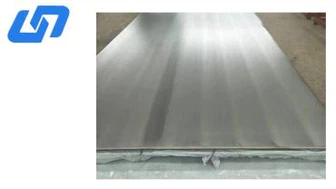
Titanium Electrode for Electroplating
Anode material: Titanium;
Coating: Iridium tantalum(IrO2 Ta2O5);
Electrolyte: Sulfate;
Temperature: 55 to 65°C;
PH: 3 - 4;
Current density: 2 -10 Amps;
Service life: 2-4 years.
Product Introduction
In electroplating applications, anodes are generally divided into two categories: soluble anodes and insoluble anodes.
Traditional graphite anodes gradually dissolve during operation, causing unstable anode-cathode distance, contamination of the plating solution, and inconsistent plating quality.
Titanium electrodes for electroplating are insoluble anodes with excellent corrosion resistance, stable conductivity, and long service life. As inert anodes, they maintain a constant electrode distance during operation, ensuring:
Stable voltage
Uniform current distribution
Improved coating quality
Reduced power consumption
Lower maintenance cost
Titanium anodes are widely used in electroplating, electrowinning, wastewater treatment, cathodic protection, and electrosynthesis industries.
Product Description
Item | Description |
Anode Material | Pure Titanium |
Coating Type | Iridium-Tantalum Oxide (IrO₂ + Ta₂O₅) |
Electrolyte | Sulfate |
Operating Temperature | 55 – 65 °C |
pH Range | 3 – 4 |
Current Density | 2 – 10 A/dm² |
Service Life | 2 – 4 Years |
Main Features
Stable Electroplating Performance
Titanium electrodes maintain a stable anode-cathode distance throughout service life, ensuring:
Uniform coating thickness
Consistent plating quality
Stable operating voltage
No Contamination
Unlike graphite or soluble metal anodes:
No sludge generation
No impurity contamination
Cleaner electrolyte solution
Low Power Consumption
Low oxygen evolution potential reduces:
Cell voltage
Energy consumption
Operating cost
Long Service Life
MMO-coated titanium anodes provide:
Excellent corrosion resistance
High coating adhesion
Long operational stability
Reusable Titanium Substrate
When the coating reaches the end of service life:
Titanium substrate can be reused
Recoating is possible after surface treatment
Lower long-term production cost
Applications
Electroplating Industry
Hard chrome plating
Precious metal plating
Gold plating
Palladium plating
Rhodium plating
Ruthenium plating
Trivalent chromium plating
PCB copper plating
Reverse pulse copper plating
High-speed electro galvanizing
Electrowinning
Used for metal extraction and recovery processes.
Cathodic Protection
Provides corrosion prevention for:
Pipelines
Storage tanks
Offshore structures
Wastewater Treatment
Widely used in:
Organic wastewater treatment
Electrochemical oxidation systems
Industrial wastewater purification
Electrosynthesis
Suitable for electrochemical production processes requiring stable oxygen evolution performance.
Available Titanium Electrode Types
1. Mixed Metal Oxide (MMO) Coated Titanium Electrodes
Coating systems:
IrO₂ + Ta₂O₅
RuO₂ + IrO₂
Other customized MMO coatings
Applications:
Hard chrome plating
PCB plating
Semiconductor industry
Electro galvanizing
Features:
Excellent catalytic activity
Long service life
Stable current distribution
2. Platinum-Coated Titanium Electrodes (Ti/Pt)
Features:
Excellent electrocatalytic performance
Low oxygen evolution potential
High exchange current density
Suitable for high-speed plating lines
Applications:
Precious metal plating
High current density electroplating
Electronics industry
3. Lead Dioxide-Coated Titanium Electrodes (Ti/PbO₂)
Features:
High oxygen evolution potential
Lower working voltage
Good electrochemical performance
Applications:
Special electrochemical systems
Wastewater treatment
Advantages of Titanium Electrodes
Excellent corrosion resistance
Long service life
Uniform current distribution
High electrochemical efficiency
Reduced operating cost
Environmentally friendly
Stable coating performance
Reusable titanium substrate
Lower maintenance requirements
Manufacturing Process
Titanium substrate preparation
Surface sandblasting and acid pickling
MMO or precious metal coating application
High-temperature thermal decomposition treatment
Quality inspection and electrochemical testing
Quality Control
Coating thickness inspection
Adhesion testing
Electrochemical performance testing
Surface inspection
Current distribution testing
Service life evaluation
Hot Tags:
You Might Also Like


Send Inquiry
