


Titanium Steel Composite Plate
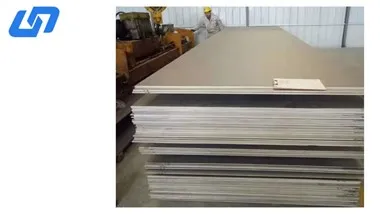
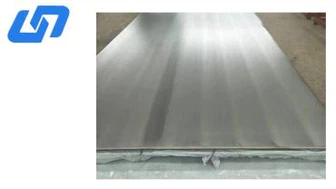
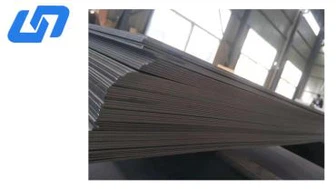
Titanium steel composite plate is a new type of engineering structural material obtained by explosive welding high temperature processing method. It not only has special properties such as corrosion resistance, heat resistance, wear resistance, etc., but also the base layer has the strength and stiffness required by the structure.
Product Introduction
Titanium Clad Steel Plate is a composite material consisting of a titanium corrosion-resistant layer metallurgically bonded to a carbon steel or stainless steel base plate.
The titanium layer provides excellent corrosion resistance, while the steel substrate offers high structural strength and lower cost, making the material an ideal solution for equipment exposed to aggressive environments.
Titanium clad plates are widely used in Flue Gas Desulfurization (FGD) chimney liners, where severe corrosion caused by sulfur dioxide, chlorides, and acidic condensates requires highly corrosion-resistant materials.
Compared with solid titanium plates, titanium clad steel plates provide significant cost savings while maintaining excellent corrosion resistance.
Typical Applications
FGD Chimney Liners
Titanium clad steel plates are widely used in:
Power plant FGD chimney systems
Chimney liners for coal-fired power plants
Desulfurization absorption towers
Corrosion-resistant ducts
The titanium layer protects the structure from acidic condensate corrosion, greatly extending the service life of the chimney system.
Structure of Titanium Clad Plate
A typical titanium clad steel plate consists of:
Cladding layer: Titanium (Grade 1 / Grade 2 / TA1 / TA2)
Base layer: Carbon steel or pressure vessel steel such as Q235B, Q245R, or Q345R
This structure provides both corrosion resistance and mechanical strength.
Manufacturing Processes
Titanium clad steel plates are typically produced using two metallurgical bonding processes:
Explosion Bonding
Strong metallurgical bonding between titanium and steel
Suitable for thick composite plates
Widely used for pressure vessels and FGD applications
Hot Rolling Bonding
Higher production efficiency
Suitable for large-scale production
Uniform bonding interface
Typical Specifications
| Titanium Layer | Steel Layer | Total Thickness |
|---|---|---|
| 1.2 – 2.0 mm | 8 – 12 mm | 9 – 14 mm |
Common configurations:
1.2 + 8 mm
1.5 + 10 mm
2.0 + 12 mm
Maximum size:
Width: ≤ 2500 mm
Length: ≤ 12000 mm
Custom sizes are available.
Advantages
Excellent Corrosion Resistance
Titanium provides outstanding resistance to acidic flue gas condensates and chloride environments.
High Structural Strength
The steel base plate ensures sufficient mechanical strength for large industrial structures.
Cost Efficiency
Using a thin titanium layer significantly reduces material costs compared with solid titanium plates.
Long Service Life
The composite structure greatly improves durability in harsh chemical environments.
Available Composite Materials
| Composite Type | Cladding Material | Base Material | Size Range |
|---|---|---|---|
| Titanium / Steel | TA1, TA2, TA9, TA10 | Q235, Q245R, Q345R | 2–10 / 8–120 mm |
| Titanium / Stainless Steel | TA1, TA2, TA9, TA10 | 304, 316L, 310S | 2–10 / 8–120 mm |
| Stainless Steel / Steel | 304, 316L, 310S | Q235, Q345R | 2–10 / 8–120 mm |
| Nickel Alloy / Steel | N4, N6, Monel, Inconel, Hastelloy | Q235, Q345R | 2–10 / 8–120 mm |
| Nickel Alloy / Stainless Steel | Monel, Inconel, Incoloy | 304, 316L | 2–10 / 8–120 mm |
Maximum plate size:
Width ≤ 2500 mm
Length ≤ 12000 mm
Hot Tags:
You Might Also Like



Send Inquiry
