


Titanium Fiber Sintered Electrode For Hydrogen Fuel Cell
Hydrogen Fuel Cell Titanium Fiber
Customizable range thickness: 0.2 ~ 3.5mm;
Porosity: 20% ~ 90%
Brand: Changsheng Titanium
Origin: China
Product Introduction
Product Introduction
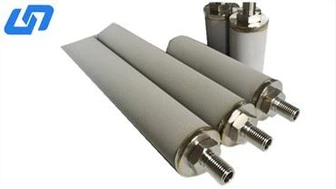
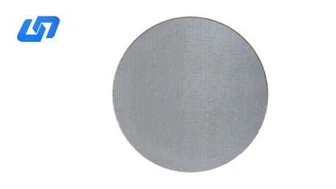
Titanium fiber sintered sheet is a porous metal material produced by sintering micron-grade titanium fibers at high temperature. During the sintering process, titanium fibers are bonded together at their contact points, forming a stable three-dimensional porous structure with interconnected pores.
This material combines high strength, low density, excellent corrosion resistance, and superior permeability, making it suitable for a wide range of demanding applications including industrial filtration, chemical processing, aerospace components, medical devices, and hydrogen fuel cell systems.
The highly porous structure provides a large specific surface area and uniform pore distribution, which significantly improves filtration efficiency and fluid permeability.
Product Advantages
Excellent corrosion resistance in aggressive chemical environments
High strength and structural stability under high pressure conditions
Low density and lightweight structure
High porosity and permeability
Uniform pore size distribution
Good formability, allowing folding and bending during processing
Product Characteristics
Micron-grade titanium fiber filaments are produced using a mechanical manufacturing process, which maintains the chemical composition and mechanical properties of the original titanium material.
After fiber preparation, the manufacturing process typically includes:
Fiber mixing
Combing and orientation
Mechanical pressing
Vacuum sintering
The resulting sheet forms a three-dimensional titanium fiber skeleton with interconnected pores and nodes. Compared with titanium powder sintered sheets, titanium fiber sintered sheets provide:
Higher mechanical strength
Better electrical conductivity
Improved permeability
Technical Parameters
Parameter | Range |
Thickness | 0.2 – 3.5 mm |
Porosity | 20% – 90% |
Structure | 3D interconnected porous structure |
Material | Pure Titanium |
(Custom specifications are available according to customer requirements.)
Hydrogen Fuel Cell Applications
Titanium fiber sintered sheets are widely considered a promising material for hydrogen fuel cell applications due to their excellent mechanical and chemical properties.
In a hydrogen fuel cell:
Hydrogen gas enters the anode, where it is split into protons and electrons
Protons pass through the electrolyte membrane
Electrons flow through an external circuit, generating electricity
At the cathode, protons and electrons react with oxygen to produce water
Titanium fiber sintered sheets can be used as the Gas Diffusion Layer (GDL) in both the anode and cathode.
Advantages in Fuel Cells
Excellent gas diffusion performance due to the porous structure
High mechanical strength under compression
Superior corrosion resistance in electrochemical environments
Longer service life compared to carbon-based GDL materials
Reduced system weight, improving fuel cell efficiency
Typical Applications
Hydrogen fuel cells (Gas Diffusion Layer)
Industrial filtration systems
Chemical processing equipment
Aerospace filtration components
Medical filtration devices
High-pressure filtration systems
Hot Tags:
You Might Also Like



Send Inquiry
