


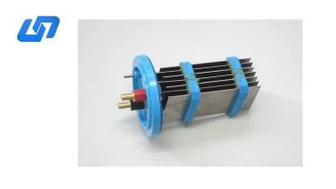
Titanium anodes for Ballast Water Treatment
Parameters of titanium anode for ballast water treatment:
Base Plate quality: First grade/Grade two pure titanium
Coating composition: ruthenium/Iridium Series
Product Shape: NET, board, tube, bar, wire, etc., or special-shaped material
Product Introduction
Titanium anodes are widely used in ballast water treatment systems (BWTS), playing a critical role in eliminating harmful aquatic organisms and preventing ecological contamination.
Ballast water is essential for maintaining the stability and trim of ships. However, it often carries a variety of microorganisms, algae, and marine species. When discharged into foreign ecosystems, these organisms may become invasive, causing significant environmental and economic damage.
Titanium anodes are applied in ballast water treatment systems to generate strong oxidizing agents-primarily chlorine and sodium hypochlorite-through electrolysis. These oxidants effectively disinfect ballast water and eliminate harmful biological contaminants.
Due to their excellent corrosion resistance and durability, titanium-based anodes are well-suited to withstand the harsh marine and electrolytic environment.
Technical Parameters
Base Material: Grade 1 / Grade 2 Pure Titanium
Coating Type: Ruthenium / Iridium (Ru–Ir series)
Available Shapes: Mesh, plate, tube, rod, wire, and custom geometries
Working Principle
Ballast water treatment using electrochemical technology typically involves:
Pre-filtration
Removal of plankton and suspended particles larger than 30–40 μmElectrolysis Process
A portion of seawater is directed through the electrolysis unit
→ Chlorine and hydrogen are generatedOxidant Formation
Chlorine reacts with seawater to form sodium hypochlorite (NaClO)Disinfection
The generated oxidants are injected into the ballast water system
→ Effectively kill microorganisms, bacteria, and algae
This method ensures efficient sterilization while maintaining operational safety.
System Advantages
Stable and reliable performance
Low chlorine evolution potential
High oxygen evolution selectivity
High electrolysis efficiency
Low consumption rate / long service life
Safety & System Benefits
Low hydrogen generation due to partial-flow electrolysis design
Hydrogen can be safely removed, eliminating explosion risks
Easy installation and system integration
Can provide cathodic protection and anti-fouling effects for ship hulls
Applications
Barges
Tankers (all sizes)
Container ships
Cruise ships / sightseeing vessels
Car carriers
Hot Tags:
You Might Also Like



Send Inquiry
