


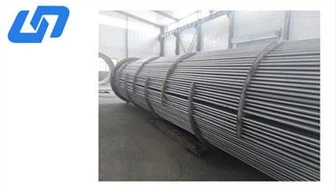
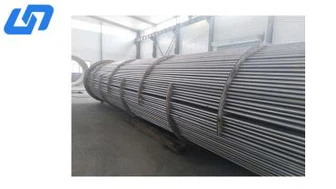
Titanium Heat Exchanger
Titanium advantage:resistant to chloride ions
Type:shell and tube heat exchanger
Materials: Gr2 titanium and explosive clad titanium steel plate
Connection method of tube and tube sheet: strength welding plus paste expansion
Technical note: titanium welding
Product Introduction
Shell and tube titanium heat exchangers made of titanium and alloys (typically Gr2 and Gr12) are ideal for use in chemical processing plants, chlorate manufacturing facilities, sulfur recovery units, hydrocarbon processing facilities, desalination processes, power generation, and many other applications. It should operate in sour and/or high-temperature conditions. In these applications, titanium is recognized as the most ideal material. That's because it can prevent leakage caused by corrosion of the production line, and it is easy to maintain later and can run for decades.
Characteristics
The corrosion resistance of titanium metal is due to the stable, protective, and strongly adherent oxide film. This film forms instantly when a fresh surface is exposed to air or moisture.
The corrosion resistance of titanium to wet chlorine gas and chloride-containing solutions is the main reason why titanium is widely used in industry. Titanium is widely used in Chlor-alkali plants, pulp, and paper bleaching equipment, acid regeneration field and seawater desalination, and power plants.
Product Description
Item | Tube Side | Shell Side |
Working pressure | 0.19Mpa | 0.072Mpa |
Design pressure | 0.21Mpa | 0.08Mpa |
Working temperature | 105℃ | 115℃ |
Design temperature | 105℃ | 115℃ |
Medium | seawater | steam or condensed water |
Size | 38×1.2mm | 6/35×1330mm |
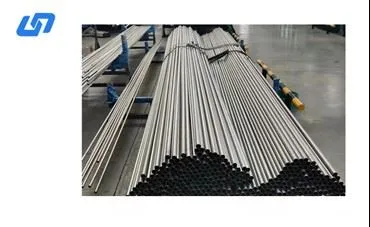
Materials | gr2 titanium welded tube | explosive clad titanium steel plate GR2/S31603 |
Titanium Welding
Materials are selected as per ASTM or GB standards and welded under a special working environment with constant temperature control and special automatic welding machines. Manufacturing of this shell & tube heat exchanger is conducted in a special-designed workshop with consideration to the temperature, when inadequate handling may cause unpleasant chemical reactions during welding.
Titanium has a few properties that play a critical role in the welding process.
(1) It has a lower density than most metals
(2) It is not as elastic as other metals
(3) Titanium has a higher melting point than most other metals used in welding
(4) It is a readily reactive material and gets contaminated easily
(5) It is not as ductile as stainless steel.
Inspection
1. Titanium heat exchanger is manufactured, tested, and accepted in accordance with the technical requirements of steel chemical container manufacturing for shell-and-tube heat exchangers.
2. The deviation of the outer diameter of the titanium heat exchange tube is ±0.15mm, and the deviation of the wall thickness is ±0.12mm.
3. The connecting pipe and the shell should be fully welded. The connecting pipe and the outer wall of the shell should avoid sharp corner transitions but should use R fillet transitions. The welds between the connecting pipes, the shell, and the reinforcement should be inspected by non-destructive flaw detection.
4. TIG welding is used for titanium welding, and the welding wire is gr2;
5. The connection between the heat exchange tube and the tube sheet is welded with expansion and strength. The weld between the heat exchange tube and the tube sheet should be tested for penetration, and the PT-I level is qualified.
6. After the expansion of the heat exchange tube, a water pressure test should be carried out. After the pressure test is qualified, the water stains must be removed, and then the end of the tube must be sealed and welded.
7. The painting, packaging, and transportation of this equipment are carried out in accordance with the relevant regulations on pressure vessel coating and transportation packaging.
8. After the equipment is manufactured, the stainless steel and titanium welds must be cleaned of oil stains and pickled and passivated. For the carbon steel part, 2 coats of primer and 1 coat of top coat are applied after rust removal.
9. The orientation of the nozzle and the support is subject to the top view, and the support is welded on site. The manhole is required to open sideways.
Hot Tags: Titanium Heat Exchangers
You Might Also Like


Send Inquiry
