


Medical Wire
Wire medical produced using platinum and other valuable metals assists with simplifying demonstrative and surgeries, more secure and more powerful.
Product Introduction
Medical Grade Titanium Wire is a high-performance biomaterial widely used in surgical implants, medical devices, and minimally invasive instruments due to its excellent biocompatibility, corrosion resistance, lightweight characteristics, and high mechanical strength.
Manufactured from commercially pure titanium according to ASTM F67, our titanium medical wires are available in Grade 1, Grade 2, Grade 3, and Grade 4, meeting the strict requirements of implantable medical applications.
Titanium wire provides an ideal combination of strength, flexibility, fatigue resistance, and biological compatibility, making it suitable for orthopedic, dental, cardiovascular, and surgical applications.
Key Features
Excellent Biocompatibility
Titanium is highly compatible with human tissue and body fluids, minimizing the risk of rejection and adverse reactions.
Suitable for long-term implantation applications.
Superior Corrosion Resistance
Titanium naturally forms a stable oxide layer on the surface, providing excellent resistance against:
Body fluids
Saline environments
Chemical corrosion
Biological degradation
This ensures long-term reliability in medical applications.
High Strength-to-Weight Ratio
Compared with stainless steel and cobalt alloys:
Lower density
High mechanical strength
Reduced implant weight
Improved patient comfort
Excellent Fatigue Resistance
Titanium medical wire maintains stable mechanical performance under:
Repeated loading
Bending stress
Dynamic movement conditions
Ideal for orthopedic and cardiovascular devices.
Good Formability and Elasticity
Titanium wire can be processed into:
Straight wire
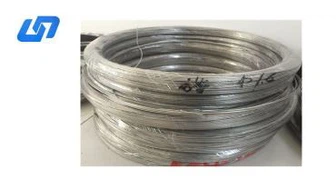
Coiled wire
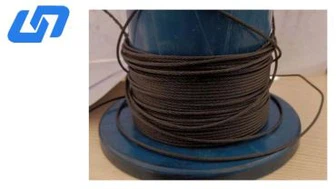
Spool wire
Custom shapes
Suitable for precision medical manufacturing.
Technical Specifications
| Parameter | Specification |
|---|---|
| Material | Commercially Pure Titanium |
| Standard | ASTM F67 |
| Grades | Grade 1, Grade 2, Grade 3, Grade 4 |
| Diameter Range | 0.05 – 5.0 mm |
| Supply Form | Coil / Spool / Straight Wire |
| Length | Customized |
| Surface Finish | Polished / Pickled |
| Manufacturing Process | Cold Drawing / Cold Rolling / Heat Treatment |
| Heat Treatment | Annealed |
| Certification | Material Test Certificate Available |
Available Titanium Grades
Grade 1 Titanium Wire
Features:
Highest ductility
Excellent corrosion resistance
Superior formability
Typical applications:
Surgical wire
Medical instruments
Precision components
Grade 2 Titanium Wire
Features:
Balanced strength and ductility
Most commonly used medical titanium grade
Applications:
Dental implants
Orthopedic devices
Surgical components
Grade 3 Titanium Wire
Features:
Higher strength compared with Grade 1 and Grade 2
Good fatigue performance
Applications:
Load-bearing medical components
Structural implant parts
Grade 4 Titanium Wire
Features:
Highest strength among commercially pure titanium grades
Excellent mechanical properties
Applications:
High-strength medical devices
Orthopedic fixation components
Manufacturing Process
Our medical titanium wire production follows strict quality control procedures:
1. Raw Material Selection
High purity titanium sponge is selected according to ASTM F67 requirements.
2. Melting & Forging
Titanium billets are produced through vacuum melting and forging processes.
3. Wire Processing
The wire is manufactured through:
Hot rolling
Cold drawing
Intermediate annealing
Final surface treatment
4. Surface Treatment
Available treatments:
Mechanical polishing
Acid pickling
Cleaning and passivation
5. Quality Inspection
Each batch is inspected for:
Chemical composition
Mechanical properties
Diameter tolerance
Surface quality
Straightness
Applications
Orthopedic Implants
Titanium medical wire is widely used in:
Bone fixation systems
Bone plates
Surgical wires
Orthopedic screws
Advantages:
Lightweight
Strong
Biocompatible
Corrosion resistant
Dental Applications
Used in:
Dental implants
Orthodontic components
Dental braces
Titanium provides excellent compatibility with oral environments.
Cardiovascular Devices
Applications include:
Guide wires
Stents
Pacemaker components
Catheter-related devices
Advantages:
Flexible
Non-toxic
Corrosion resistant
Spinal Implants
Used for:
Spinal fixation systems
Rods
Surgical components
High fatigue resistance ensures long-term reliability.
Medical Instruments
Used in:
Surgical tools
Precision medical devices
Minimally invasive instruments
Mechanical Properties (Annealed Condition)
| Grade | Tensile Strength Min. (MPa) | Yield Strength Min. (MPa) | Elongation Min. (%) |
|---|---|---|---|
| Gr1 | 240 | 170 | 24 |
| Gr2 | 345 | 275 | 20 |
| Gr3 | 450 | 380 | 18 |
| Gr4 | 550 | 483 | 15 |
Chemical Composition Requirements
| Grade | Fe Max | O Max | N Max | C Max | H Max |
|---|---|---|---|---|---|
| Gr1 | 0.20% | 0.18% | 0.03% | 0.08% | 0.015% |
| Gr2 | 0.30% | 0.25% | 0.03% | 0.08% | 0.015% |
| Gr3 | 0.30% | 0.35% | 0.05% | 0.08% | 0.015% |
| Gr4 | 0.50% | 0.40% | 0.05% | 0.08% | 0.015% |
Titanium: Balance
Size Tolerance
| Diameter Range | Diameter Tolerance |
|---|---|
| 7.94 – 3.18 mm | ±0.051 mm |
| 3.18 – 0.76 mm | ±0.025 mm |
| 0.76 – 0.25 mm | ±0.020 mm |
| 0.25 – 0.13 mm | ±0.013 mm |
Supply Forms
Straight Titanium Wire
Length:
1000 mm
2000 mm
3000 mm
Customized length available
Titanium Coil Wire
Available coil weights:
1 kg
5 kg
10 kg
Titanium Spool Wire
Available for automated medical device production.
Quality Assurance
We provide complete quality documentation:
Material certificate (MTC)
Chemical analysis report
Mechanical test report
Dimensional inspection report
Surface inspection report
Hot Tags:
You Might Also Like



Send Inquiry
