


Titanium Grade 2 Wire ASTM B863
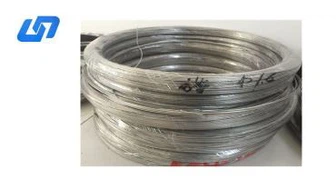
Product: Titanium wire *Grade: Titanium Grade 2 *Diameter: 0.05-5mm dia *Purpose: making titanium bolts
Product Introduction
Titanium wire combines low density, high strength-to-weight ratio, excellent corrosion resistance, and good ductility. It is widely used in chemical processing, welding, electroplating, water treatment, fastening, medical applications, and other industries.
Commercially pure titanium grades such as Gr1 and Gr2 are commonly selected for applications requiring corrosion resistance and good formability. Titanium alloy grades such as Gr5, Gr9, Gr12, and Gr23 provide higher strength or enhanced performance for specific applications.
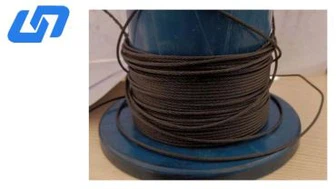
Titanium wire is available in coils or straight lengths and can be supplied according to customer requirements.
Specifications
| Item | Specification |
|---|---|
| Standard | ASTM B863 |
| Grades | Gr1, Gr2, Gr4, Gr5, Gr7, Gr9, Gr12, Gr23 |
| Diameter | 0.05–5.0 mm |
| Shape | Coiled or straight |
| Surface | Pickled or as required |
| Supply Form | Coil / Straight Length |
| Coil Weight | Up to 100 kg/coil without welding joints |
| Trial Quantity | 5 / 10 / 30 kg available for testing |
| Customization | Diameter, length, surface condition and packaging according to requirements |
Titanium Wire for Welding
Titanium welding wire is used as filler metal for TIG and other suitable welding processes.
Straight titanium welding rods can be supplied in standard or customized lengths, while small-diameter titanium wire can also be supplied in coils.
Common applications include welding and fabrication of:
Titanium tanks
Titanium heat exchangers
Titanium piping
Titanium vessels
Titanium equipment
Chemical processing equipment
The appropriate titanium grade should be selected according to the base material and welding requirements.
Key Properties
Titanium wire offers a combination of:
Excellent corrosion resistance
Low density and light weight
High strength-to-weight ratio
Good ductility
Good fatigue resistance
Good weldability for suitable grades and conditions
Stable performance in many chemical environments
Good performance at elevated and low temperatures
Gr1 and Gr2 titanium wire are particularly suitable when corrosion resistance and formability are the primary requirements.
Mechanical Properties
Typical mechanical properties vary according to titanium grade, product condition, and applicable specification. The following values can be used as a general reference:
| Grade | Tensile Strength, MPa | Yield Strength, MPa | Elongation, % |
|---|---|---|---|
| Gr1 | ≥240 | ≥170 | ≥24 |
| Gr2 | ≥345 | ≥275 | ≥20 |
| Gr4 | ≥550 | ≥483 | ≥15 |
| Gr5 | ≥895 | ≥828 | ≥10 |
| Gr7 | ≥400 | ≥275 | ≥18 |
| Gr9 | ≥620 | ≥483 | ≥15 |
| Gr12 | ≥483 | ≥348 | ≥18 |
| Gr23 | ≥793 | ≥759 | ≥10 |
Actual mechanical properties should be confirmed according to the applicable material standard and supplied product condition.
Applications
1. Chemical Processing
Gr1 and Gr2 titanium wires are widely used in chemical environments because of their excellent corrosion resistance.
They can be used for:
Titanium mesh
Chemical filters
Fasteners
Tying and fixing components
Equipment components
Corrosion-resistant structures
2. Electroplating and Water Treatment
Titanium wire and titanium alloy wire can be used to manufacture or assemble:
Electroplating baskets
Electrode structures
Titanium mesh
Water-treatment electrodes
Electrochemical components
Cathodic protection components
Titanium wire is particularly useful where corrosion resistance and long service life are required in electrolytic environments.
3. Titanium Fasteners and Components
Titanium wire can be processed into various small components, including:
Fasteners
Springs
Clips
Pins
Ties
Custom formed parts
Titanium's low density and high strength-to-weight ratio make it suitable for applications where weight reduction is important.
4. Medical Applications
Selected titanium and titanium alloy grades are used in medical and dental applications because of their biocompatibility and corrosion resistance.
Applications may include:
Medical wires
Dental components
Orthopedic devices
Surgical components
Implant-related components
Medical applications require appropriate material certification, processing, and regulatory compliance.
5. Shape Memory Titanium Alloys
Special titanium alloys such as nickel-titanium (NiTi) have shape-memory and superelastic properties.
NiTi wire is widely used in applications such as:
Medical devices
Orthodontic products
Eyeglass frames
Actuators
Precision components
These applications are different from conventional commercially pure titanium wire and require specialized NiTi alloy processing.
Titanium Wire for Electrochemical Applications
Titanium wire can be used as a structural or conductive component in electrochemical systems.
Depending on the application, it may be supplied as:
Plain titanium wire
Titanium wire mesh
MMO-coated titanium wire
Customized titanium electrode assemblies
For electrochemical applications, factors such as titanium grade, wire diameter, electrolyte composition, current density, operating temperature, and electrode coating should be considered when selecting the material.
Why Choose Titanium Wire?
Titanium wire provides an excellent combination of corrosion resistance, low weight, strength, and formability.
We can supply titanium wire in different grades, diameters, surface conditions, coil weights, and lengths to meet specific application requirements.
Hot Tags:
You Might Also Like




Send Inquiry
