


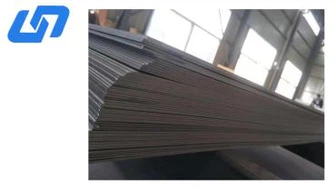
ASTM B265 Titanium Plate
Standard: ASTM B265
Grade: Gr1, Gr2, Gr3, Gr4, Gr5, Gr7, Gr9, Gr12, Gr23, BT1-00 BT1-0 BT1-2
Size: Tkh:0.01mm above, width: <2500mm, length: <6000mm
Product Introduction
ASTM B265 covers titanium and titanium alloy strip, sheet, and plate. Material grades and supply conditions should be specified according to the applicable standard and project requirements.
We supply titanium plate and sheet in various grades, thicknesses, and dimensions, with customized cutting and processing options subject to availability.
Material Grades
Commercially Pure Titanium
Grade 1: High ductility and good formability.
Grade 2: A widely used grade offering a balance of strength, formability, and corrosion resistance.
Grade 3: Higher strength than Grades 1 and 2.
Grade 4: The highest strength among the commonly used commercially pure titanium grades.
Titanium Alloys
Grade 5 (Ti-6Al-4V): A high-strength titanium alloy used in structural and engineering applications.
Grade 7: Commercially pure titanium with palladium added to improve corrosion resistance in suitable chemical environments.
Grade 9 (Ti-3Al-2.5V): A titanium alloy combining moderate strength with good formability.
Grade 12 (Ti-0.3Mo-0.8Ni): An alloy developed for improved corrosion resistance in selected industrial environments.
Grade 23 (Ti-6Al-4V ELI): An extra-low-interstitial version of Ti-6Al-4V for applications requiring the corresponding material properties.
The suitability of each grade depends on the service environment, design requirements, and applicable material specification.
Standard and Processing
Material standard: ASTM B265 - Standard Specification for Titanium and Titanium Alloy Strip, Sheet, and Plate.
Available processing and supply conditions may include:
Hot-rolled
Cold-rolled
Annealed
Cut-to-size and customized dimensions
The available condition depends on the material grade, thickness, and manufacturing route.
Available Size Range
The following dimensions represent the listed supply range and should be confirmed for each grade and order.
| Thickness | Width | Length |
|---|---|---|
| 0.3–0.5 mm | 400–600 mm | 1,500 mm |
| 0.6–0.8 mm | 400–800 mm | 1,200 mm |
| 0.9–6.0 mm | 400–1,000 mm | 1,000–3,050 mm |
| 6.1–15 mm | 400–2,000 mm | 1,000–6,000 mm |
| 16–60 mm | 400–2,800 mm | 1,000–5,600 mm |
Custom cutting and dimensions can be discussed according to the required grade, thickness, quantity, and application.
Chemical Composition Overview
| Grade | Main Composition Characteristics |
|---|---|
| Grades 1–4 | Unalloyed titanium with grade-specific limits for oxygen, iron, and other elements |
| Grade 5 | Titanium alloy containing approximately 6% aluminum and 4% vanadium |
| Grade 7 | Unalloyed titanium with a palladium addition |
| Grade 9 | Titanium alloy containing approximately 3% aluminum and 2.5% vanadium |
| Grade 12 | Titanium alloy containing approximately 0.3% molybdenum and 0.8% nickel |
| Grade 23 | Ti-6Al-4V ELI, with controlled low interstitial element levels |
Exact chemical composition and mechanical property requirements should be verified against the applicable ASTM B265 edition and the material test certificate.
Key Properties of Titanium Plate
High Strength-to-Weight Ratio
Titanium has a density of approximately 4.5 g/cm³, making it significantly lighter than steel. Titanium alloys such as Grade 5 provide high strength relative to their weight.
Corrosion Resistance
Titanium performs well in many oxidizing environments and seawater applications. Corrosion resistance varies with grade, temperature, concentration, and chemical conditions, so material compatibility should be assessed for the intended service.
Formability and Fabrication
Commercially pure titanium grades offer different levels of ductility and strength. The appropriate grade and supply condition should be selected according to bending, forming, welding, or machining requirements.
Material Selection Flexibility
The range of commercially pure grades and titanium alloys allows material selection based on the balance required between strength, formability, corrosion resistance, and weight.
Industrial Applications
Petrochemical Industry
Titanium plate may be used in selected equipment such as heat exchangers, vessel components, and corrosion-resistant linings where the operating conditions justify titanium.
Chemical Processing
Applications may include process equipment, tanks, piping components, and selected equipment exposed to corrosive chemicals. Grade selection requires evaluation of the specific process medium.
Pulp and Paper Industry
Titanium may be used in selected bleaching, chemical-processing, and heat-transfer equipment where its corrosion resistance is suitable for the process conditions.
Power Generation and Desalination
Titanium plate is used in selected seawater-handling equipment, heat exchangers, and desalination-related components.
Marine and Offshore Engineering
Titanium may be considered for specialized marine components and offshore equipment where weight reduction and corrosion resistance are important design factors.
Quality and Documentation
Material documentation and inspection requirements can be agreed according to the order specification. Depending on the product and project, documentation may include:
Material test certificates
Chemical composition and mechanical test results
Dimensional inspection records
Material identification and traceability, where specified
Applicable standards, inspection requirements, and acceptance criteria should be confirmed before order placement.
Frequently Asked Questions
What is ASTM B265?
ASTM B265 is the standard specification for titanium and titanium alloy strip, sheet, and plate. It covers material requirements for specified grades and product forms.
What is the difference between Grade 1 and Grade 2 titanium?
Both are commercially pure titanium grades. Grade 1 generally offers higher ductility, while Grade 2 provides a useful balance of strength, formability, and corrosion resistance.
Which titanium grade is suitable for chemical processing?
The appropriate grade depends on the chemical medium, concentration, temperature, and operating conditions. Grade 2, Grade 7, and Grade 12 may be considered for different environments, but compatibility should be verified for the specific application.
Can titanium plate be supplied to custom dimensions?
Custom dimensions and cutting can be discussed according to the required grade, thickness, size, quantity, and available stock or production capability.
What information is needed for a quotation?
Please specify the titanium grade, ASTM standard and edition if required, thickness, width, length, quantity, delivery condition, and any additional testing or documentation requirements.
Hot Tags:
You Might Also Like



Send Inquiry
