


Titanium Exhaust pipe
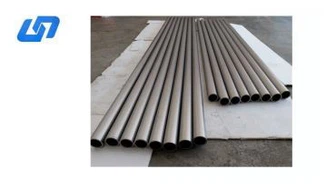
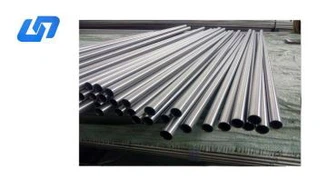
Gr1 titanium exhaust pipe is widely used for vehicle/ motorcycle exhuast pipe manufacturing, it is light weight, high strength and excellent corrosion resistant.seamless and welded gr1 titanium exhaust pipe both can be provided
Product Introduction
Compared with conventional stainless steel exhaust components, titanium exhaust pipes can significantly reduce exhaust system weight. They can also develop distinctive blue, purple, and gold surface colors when heated, making them popular in performance automotive and motorcycle applications.
However, selecting the right titanium material requires more than comparing weight and strength. Operating temperature, mechanical loads, tube fabrication methods, and service conditions must all be considered.
Key Advantages
1. Lightweight
Titanium has a density of approximately 4.51 g/cm³, compared with approximately 7.9–8.0 g/cm³ for common stainless steels.
This means titanium is roughly 43% lighter than stainless steel by volume. For exhaust systems with comparable dimensions and wall thicknesses, this difference can translate into substantial weight savings.
Reduced exhaust system weight is particularly valuable in racing motorcycles, sports cars, and other performance vehicles, where lower mass can contribute to improved handling and overall vehicle performance.
2. High Strength-to-Weight Ratio
Titanium combines relatively low density with useful mechanical strength, making it suitable for lightweight structural components.
Commercially pure titanium, such as Grade 2, provides a practical balance of strength, formability, and corrosion resistance. Titanium Grade 9 (Ti-3Al-2.5V) offers higher strength than commercially pure titanium while maintaining good formability and weldability.
These properties make Grade 9 an option for applications requiring lightweight tubing with increased mechanical strength.
The appropriate grade depends on the component design, manufacturing requirements, and operating conditions.
3. Excellent Corrosion Resistance
Titanium naturally forms a stable, protective oxide film on its surface. This film contributes to its excellent corrosion resistance in many environments.
For exhaust systems, titanium's corrosion resistance can help protect components against moisture, road spray, and other corrosive conditions encountered during vehicle operation.
Nevertheless, corrosion resistance and high-temperature oxidation resistance are different properties. The suitability of a titanium grade for a particular exhaust application must be evaluated against its actual service conditions.
4. High-Temperature Performance
Titanium is used in selected automotive exhaust applications where weight reduction and mechanical performance are important.
However, titanium's strength and oxidation behavior change with temperature. Its suitability depends on the maximum operating temperature, exposure duration, applied stress, and material grade.
For this reason, titanium exhaust pipes should be selected according to their installation location and expected thermal conditions.
Areas close to the engine, including exhaust manifolds and collectors, may experience substantially higher temperatures than downstream exhaust sections. These high-temperature locations require particular attention to material selection and component design.
Grade 9 offers higher strength than commercially pure titanium at room temperature, but it should not automatically be considered more suitable for high-temperature service.
5. Distinctive Heat-Induced Colors
One of the most recognizable features of titanium exhaust systems is their colorful surface appearance after exposure to heat.
Depending on the temperature history, oxide film thickness, surface finish, and other conditions, heated titanium can display shades of gold, blue, purple, and other colors.
These colors are particularly popular in motorcycle exhaust systems and performance racing applications.
The coloration is primarily an optical effect associated with the surface oxide film. It should not be used as a reliable indicator of the material's temperature history or remaining service life.
6. Exhaust Sound Characteristics
Titanium exhaust systems are often associated with a distinctive, crisp sound in performance vehicles.
Their acoustic characteristics depend on several factors, including tube wall thickness, exhaust geometry, muffler design, gas flow, and engine operating conditions.
Titanium's lower density and the design flexibility of thin-wall tubing can influence the sound produced by an exhaust system. However, the final sound cannot be attributed to the material alone.
Specifications
Titanium exhaust tubing can be supplied in different grades, dimensions, and manufacturing conditions depending on the intended application.
Material Grades
Titanium Grade 1
Commercially pure titanium with relatively low strength and excellent ductility. It may be considered for applications where formability is important and its mechanical properties meet the design requirements.
Titanium Grade 2
Commercially pure titanium offering a practical balance of strength, ductility, formability, weldability, and corrosion resistance. It is a potential option for exhaust components operating within suitable temperature and stress limits.
Titanium Grade 9 (Ti-3Al-2.5V)
A titanium alloy containing approximately 3% aluminum and 2.5% vanadium. It provides higher strength than commercially pure titanium and is used in selected aerospace, automotive, and motorsport components.
Grade selection should be based on the component's actual mechanical and thermal requirements rather than strength alone.
Manufacturing Methods
Titanium tubing for exhaust applications may be produced using different manufacturing processes.
Seamless titanium tubing: Manufactured without a longitudinal weld seam and available in various dimensions and wall thicknesses.
Welded titanium tubing: Manufactured from titanium strip or sheet using a suitable welding process. It can be an economical option for applications requiring specific dimensions or production quantities.
The choice between seamless and welded tubing depends on dimensional requirements, fabrication methods, mechanical loading, production volume, and customer specifications.
Applicable ASTM Standards
The applicable standard depends on the product form and intended service.
ASTM B338: Covers seamless and welded titanium and titanium alloy tubes intended for condensers, evaporators, and heat exchangers.
ASTM B861: Covers seamless titanium and titanium alloy pipe.
ASTM B862: Covers welded titanium and titanium alloy pipe.
These standards have different scopes and should not be treated as interchangeable specifications for automotive exhaust tubing.
For custom exhaust applications, the manufacturer and customer should confirm the applicable material specification, dimensions, tolerances, inspection requirements, and mechanical properties before production.
Available Dimensions and Surface Conditions
Titanium exhaust tubing can be specified according to:
Outside diameter
Wall thickness
Length
Material grade
Manufacturing process
Surface condition
Dimensional tolerances
Depending on the manufacturing process and customer requirements, surface conditions may include pickled, chemically cleaned, or mechanically finished surfaces.
Custom dimensions may be available depending on the manufacturer's production capabilities.
Mechanical Properties of Titanium Grade 1
The following table summarizes typical minimum room-temperature tensile requirements associated with commonly specified ASTM Grade 1 titanium products. Exact requirements must be confirmed against the applicable product standard and material condition.
| Property | Typical minimum requirement |
|---|---|
| Tensile strength | 240 MPa |
| Yield strength (0.2% offset) | 138 MPa |
| Elongation | 24% |
These values describe room-temperature mechanical properties. They do not establish the maximum permissible service temperature or the long-term performance of Grade 1 titanium in an exhaust system.
Chemical Composition of Titanium Grade 1
The following table lists commonly specified maximum concentrations for selected elements in Grade 1 titanium.
| Element | Maximum content (wt.%) |
|---|---|
| Iron (Fe) | 0.20 |
| Carbon (C) | 0.08 |
| Nitrogen (N) | 0.03 |
| Oxygen (O) | 0.18 |
| Hydrogen (H) | 0.015 |
Titanium content and additional compositional requirements are governed by the applicable material specification. The values above should not be used as a substitute for the complete standard or a certified material test report.
Applications
Titanium exhaust tubing is used in applications where weight reduction, corrosion resistance, and performance are important.
Common applications include:
Motorcycle exhaust systems: Lightweight exhaust pipes, mid-pipes, collectors, and muffler components.
Performance automotive exhaust systems: Selected exhaust sections designed to reduce overall vehicle weight.
Racing vehicles: Custom exhaust components for motorcycles, sports cars, and competition vehicles.
Aftermarket exhaust systems: Premium exhaust upgrades designed around weight reduction, appearance, and performance.
Custom motorsport fabrication: Specialized tubing and exhaust components manufactured to customer drawings.
The suitability of titanium for each application depends on the component's temperature profile, structural requirements, fabrication process, and service environment.
How to Choose the Right Titanium Grade for Exhaust Systems
Selecting a titanium grade requires consideration of both mechanical properties and actual service conditions.
Grade 1: For Applications Requiring High Ductility
Grade 1 titanium offers excellent ductility and relatively low strength. It may be suitable for components requiring significant forming, provided the design's mechanical and thermal requirements can be met.
Grade 2: For a Balance of Strength and Formability
Grade 2 is commercially pure titanium with higher strength than Grade 1. It offers a useful combination of mechanical properties, formability, weldability, and corrosion resistance.
For selected exhaust components operating within appropriate temperature limits, Grade 2 may provide a practical material option.
Grade 9: For Higher Mechanical Strength
Grade 9 titanium offers higher mechanical strength than commercially pure titanium while retaining useful forming and welding characteristics.
It may be considered for exhaust components where greater strength is required without moving to a higher-strength alloy such as Grade 5.However, Grade 9 should not be selected solely because a component experiences high temperatures. Its high-temperature suitability must be verified for the specific operating conditions.
Hot Tags:
You Might Also Like




Send Inquiry
