


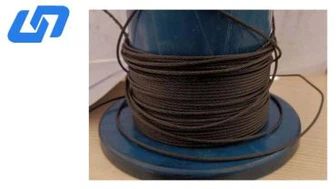
GR7 Titanium Wire
The content of palladium in gr7 titanium wire is usually between 0.12% and 0.25%. This alloy has higher strength and corrosion resistance than pure titanium, and its ability to maintain strength in high temperature environments is also better.
Product Introduction
Product Overview
Grade 7 titanium wire is a titanium-palladium (Ti-Pd) alloy wire with exceptional corrosion resistance across a wide range of media, including neutral and oxidizing environments, as well as dilute reducing acids at room temperature.
It is particularly suitable for applications in:
Chemical equipment
Petroleum industry
Food and beverage industry
Aerospace
Biotechnology and medical equipment
Grade 7 titanium wire combines:
Lightweight properties
High strength
Excellent corrosion resistance
Good biocompatibility
Corrosion Resistance
Resistant to most alkaline solutions (e.g., saturated barium hydroxide, sodium hydroxide, magnesium hydroxide) at room temperature
Strong resistance in seawater and most organic acids (except formic and oxalic acid)
Excellent performance in chlorine, chlorite, and hypochlorite solutions
Corrosion resistance in sodium chloride solutions improves with increasing pH
The remarkable stability of titanium in various media is due to the formation of a dense, self-repairing oxide layer on the surface, which protects the material from corrosion.
Palladium (Pd) enhances corrosion resistance, particularly in reducing environments, and improves crevice corrosion resistance. The cathodic effect of Pd also optimizes the anodic behavior of titanium alloys.
Specification
Property | Specification |
Main Composition | Ti: balance, Pd: 0.12–0.25%, N: ≥0.03%, C: ≤0.08%, H: ≤0.013%, Fe: ≤0.25%, O: ≤0.15% |
Common Grades | Ti-0.2Pd, Ti-0.15Pd, Ti-0.13Pd |
Executive Standard | ASTM B863 |
Density | 4.51 g/cm³ |
Grain Size | 6.0 – 7.0 μm |
Mechanical Properties | Tensile strength ≥ 345 MPa, Yield strength ≥ 275 MPa, Elongation ≥ 27% |
Production States | Hot working (R), Cold working (Y), Annealed (M) |
Key Advantages
Superior corrosion resistance in oxidizing and many reducing media
High mechanical strength with excellent elongation
Lightweight material with density lower than steel and nickel
Biocompatible, suitable for food, pharmaceutical, and medical applications
Stable in seawater, acids, and many chemicals
Long service life due to palladium-enhanced oxide layer
Typical Applications
Chemical processing equipment: reactors, towers, autoclaves, heat exchangers
Pumps, valves, centrifuges, and fittings in corrosive environments
Electrolyzers and other electrochemical devices
Aerospace components requiring high strength and corrosion resistance
Medical and biotech devices needing biocompatible materials
Hot Tags:
You Might Also Like



Send Inquiry
