


ASME Pressure Vessel Head
Head and bottom end:OD89mm--10000mm,thickness2mm-20mm
Reduction Ratio:<10%
Forming method: Hot forming, cold forming
Standard:ASME ,PED and GB
Applications: oil, chemical industry, water conservancy, electric power, boiler, machinery, metallurgy, sanitary construction, etc.
Product Introduction
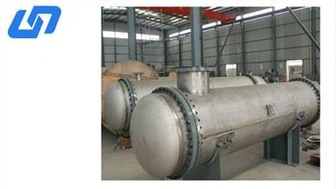
The pressure vessel head refers to the element used to close the end of the container to isolate the internal and external media, also known as the end cap. The head of the cylindrical container is generally a revolving shell. The pressure vessel head is the end cap on the pressure vessel and is the main pressure-bearing part of the pressure vessel. The role played is the sealing effect. ASME pressure vessel head are an indispensable and important part of pressure vessel equipment in the petrochemical, atomic energy, food, and pharmaceutical industries. Being the pressure vessel head manufacturer, we started in 2001, more than 20 years of experience in China.
According to the shape of the pressure vessel head surface, it can be divided into convex, conical, flat, and combined. Convex head refers to a head whose outer surface is convex, such as a hemispherical, elliptical, dish-shaped, and spherical head without folding. Some gas cylinders use a combination bottom head with a convex inward face, which can not only ensure strength but also meet the needs of safe use.
Specification
Pressure vessel head: OD89mm--10000mm,thickness2mm-20mm
Reduction Ratio:<10%
Forming method: Hot forming, cold forming
Standard:ASME ,PED and GB
Applications: oil, chemical industry, water conservancy, electric power, boiler, machinery, metallurgy, sanitary construction, etc.
Process
Head shape and application
The vessel head and bottom ends are important pressure components of pressure vessels and boilers. In terms of shape, it can be divided into a flat head, dish head, an elliptical head, and a spherical head. The heads of high-pressure vessels and boilers are mostly spherical, elliptical heads are used for medium pressure and above, and dish-shaped heads are used only for a small number of low-pressure vessels.

Head processing
*Stamping. To adapt to mass production, to suppress thick-walled and small-diameter heads, multiple sets of head molds are required.
*Spinning. Some super-large and ultra-thin heads, especially in the chemical industry, are mostly large and small batches, especially suitable for spinning. The oval head is very suitable for spinning, while the dish head is rarely used, and the spherical head is more difficult to press.
Head processing equipment and tools
*Heating equipment. Gas stoves are mostly used in large factories. At present, the heating adopts chamber type or reflective heating furnace, and fuel oil or gas heating is used as much as possible. The characteristics of Gangwei are clean combustion, high efficiency, easy temperature control, not easy to burn, and not easy to decarbonize. The heating furnace shall be equipped with a temperature measuring device and a temperature recorder.
*There are two types of vessel head presses: single-action and double-action; there are also two types of hydraulic presses and hydraulic presses. Single-action means only stamping cylinders, no edge-pressing cylinders, and only small and medium-sized factories are using them. Large factories use double-acting, that is, there is a blank holder and a stamping cylinder. The transmission medium of the hydraulic press is water, which is cheap, moves quickly, and is not stable. The transmission medium of the hydraulic press is oil, which is more expensive than water to change the oil once, the transmission is stable, the requirements for sealing are high, the requirements for guidance are high, and the requirements for oil are high. Some actions produce shocks, which make the action of the press unstable. Therefore, it is necessary to filter the oil frequently, change the oil on time, and thoroughly clean the oil circuit and the oil tank when changing the oil.
*Use tooling. Various head forming upper and lower dies and feet, etc. (must be checked and accepted according to relevant technical conditions, there should be no pores, shrinkage, slag inclusion, etc., and the geometric dimensional accuracy and curve can be used after passing the inspection).
*Common tools. Tightening wrench, sledgehammer, crowbar, steel ruler, tape measure, photoelectric thermometer, internal and external calipers, handling tools, etc.
Compression of head-ends
When pressing, the billets of head ends should be placed as far as possible to be concentric with the mold, and the offset between the center of the blank and the lower mold should be less than 5 mm. When pressing with a hole head, it should be noted that the elliptical opening of the blank is aligned with the direction of the long and short axes of the mold. During the pressing process, the manhole punch should be aligned with the opening position of the blank and pushed out slightly higher than the lower mold. At the plane (about 20 mm), then the upper die is pressed down again, the manhole punch is also dropped at the same time, and the head is pressed into shape. During pressing, the punching force should be slowly increased from small to small, and should not be suddenly increased or decreased.
When the hot stamping head is cooled to below 600 degrees, it can be pulled away from the mold for hoisting, and must not be placed in the tuyere, and more than two pieces should not be stacked before cooling to room temperature. During continuous stamping, the temperature of the die rises to about 250 °C, and the stamping should not be continued. After cooling measures are taken to reduce the temperature of the die, the work can be continued. The perforated head should be formed at one time as much as possible. When it cannot be formed at one time due to conditions, attention should be paid to the concentricity with the head when punching the manhole, and attention should be paid to keeping the wall thickness at the flange of the manhole uniform.
During the positioning welding of the stainless steel head, it is necessary to select the welding point. When selecting the welding point, the welding point can be selected in combination with the well-made marks, so as to ensure that the installation effect of the head meets the standard requirements. After completing the above operations The welding process can only be carried out after the program.
When the staff usually welds the stainless steel head, it is necessary to combine the specific work procedures and specifications, so as to ensure the processing effect of the head and avoid other problems caused by improper operation.
Inspection
The inspection of the pressure vessel head is an important part of ensuring the safe operation of the vessel. The inspection should be conducted regularly, based on the frequency determined by the applicable codes and regulations. The inspection of the pressure vessel head typically includes visual inspection, ultrasonic testing, radiographic testing, or other non-destructive testing methods. The visual inspection is usually the first step, which involves a thorough visual examination of the surface of the head for any signs of corrosion, erosion, cracking, or deformation. If any defects are found, further testing is usually conducted to determine the extent of the damage and the required repair or replacement. Being a professional pressure vessel head manufacturer, our inspection of the head strictly follows the ASME Pressure Vessel Head Inspection Regulations and supplies the test report issued by a third-party authority center.
Hot Tags:
You Might Also Like




Send Inquiry
