


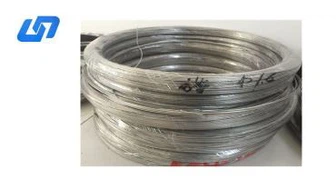
Erti2 Erti7 Titanium Tig Welding Rod
standard: AWS5.16
size:0.5mm above, length is 1000mm or customized
sample: in stock
Product Introduction
Titanium TIG welding rod, also known as titanium filler rod or titanium welding wire, is used for TIG welding of titanium and titanium alloy components. It is available in pure titanium grades and titanium alloy grades and can be supplied in straight lengths, coils, or spools according to welding requirements.
Titanium filler rod is widely used for fabricating and repairing titanium equipment exposed to corrosive chemical environments. Typical applications include titanium pipes, heat exchangers, reactors, storage tanks, pressure vessels, and other chemical processing equipment.
Titanium offers an excellent combination of high strength-to-weight ratio, low density, excellent corrosion resistance, and good weldability. When properly selected and welded under adequate inert-gas shielding, the filler metal can provide high-quality weld joints with corrosion resistance and mechanical properties compatible with the base material.
For highly corrosive applications, Grade 7 titanium containing palladium can be selected when enhanced resistance to reducing acids, crevice corrosion, and certain chloride-containing environments is required.
Titanium Welding Rod Specifications
| Item | Specification |
|---|---|
| Product Name | Titanium TIG Welding Rod |
| Other Names | Titanium Filler Rod, Titanium Welding Wire, Titanium TIG Wire |
| Material | Pure Titanium / Titanium Alloy |
| Grades | Gr1, Gr2, Gr3, Gr4, Gr5, Gr7, Gr9, Gr11, Gr12, Gr23, etc. |
| Diameter | Φ0.8–6.0 mm |
| Inch Size | 0.031"–0.24" |
| Product Form | Straight Rod, Coil, Spool |
| Surface | Bright / Cleaned / Pickled |
| Manufacturing | Drawing / Straightening / Cutting / Surface Treatment |
| Standard | AWS A5.16, ASTM B863, ASTM F67, ASTM F136, ISO 5832-2, ISO 5832-3, or customer-specified standards |
| Length | Customized |
| Packaging | Plastic bag + export wooden case or customized packaging |
Custom diameters, lengths, packaging, and inspection requirements are available upon request.
Available Titanium Grades
Commercially Pure Titanium
Grade 1 / Grade 2 / Grade 3 / Grade 4
Commercially pure titanium welding rods provide excellent corrosion resistance and good weldability. They are commonly selected for chemical processing equipment, heat exchangers, piping systems, seawater applications, and general titanium fabrication.
Titanium TIG Welding Rod for Corrosive Environments
Titanium welding filler rods are particularly suitable for equipment operating in corrosive environments.
Typical applications include:
Sulfur-containing environments
Chloride-containing environments
Seawater and marine environments
Chemical processing systems
Heat exchangers
Acid storage tanks
Chemical reactors
Titanium piping systems
For specific chemical environments, the welding rod grade should be selected according to the base material, process medium, temperature, pressure, and corrosion conditions.
Advantages of Titanium Welding Rod
Excellent Corrosion Resistance
Titanium provides outstanding resistance to many corrosive media, including seawater, chlorides, and various chemical solutions. Properly welded titanium joints can maintain excellent corrosion resistance when suitable shielding and welding procedures are applied.
High Strength-to-Weight Ratio
Titanium provides high mechanical strength at a relatively low density, making it suitable for applications where weight reduction is important.
Excellent Weldability
Pure titanium and many titanium alloys can be TIG welded effectively when proper welding procedures, surface preparation, and inert-gas protection are used.
Lightweight
The low density of titanium helps reduce the overall weight of fabricated equipment and structures compared with many conventional metallic materials.
Long Service Life
Excellent corrosion resistance allows titanium welding assemblies to maintain reliable performance over long operating periods, particularly in aggressive environments.
Suitable for Precision Welding
Small-diameter titanium filler rods can be used for precision TIG welding of thin-wall tubes, sheets, pipes, heat exchanger components, and other titanium parts.
Titanium TIG Welding Process
Titanium is highly reactive at elevated temperatures. Therefore, effective shielding is essential during welding.
Recommended welding practices include:
Thoroughly clean the base metal and filler rod before welding.
Remove oil, grease, dust, moisture, and other contaminants.
Use high-purity argon or an appropriate inert shielding gas.
Maintain sufficient shielding of the weld pool and heated titanium.
Use a controlled welding current and short arc length.
Avoid excessive heat input.
Protect the weld area until the titanium temperature has fallen sufficiently.
Use clean tools dedicated to titanium fabrication to avoid iron contamination.
Proper shielding is particularly important because oxygen, nitrogen, hydrogen, and other contaminants can adversely affect the mechanical properties and appearance of titanium welds.
Surface and Product Forms
Titanium TIG welding rod can be supplied in several forms to meet different welding requirements.
Straight Welding Rod
Suitable for manual TIG welding of:
Titanium pipes
Titanium sheets
Heat exchangers
Reactors
Storage tanks
Chemical equipment
Coiled Welding Wire
Suitable for automated and semi-automatic welding systems.
Spool Welding Wire
Suitable for continuous welding and automated welding equipment.
Precision Small-Diameter Rod
Small-diameter filler rods are available for precision welding and thin-wall titanium components.
Applications
Titanium TIG welding rods are widely used in:
Chemical Processing
Chemical reactors
Storage tanks
Process piping
Heat exchangers
Condensers
Evaporators
Petrochemical Industry
Corrosion-resistant piping
Process equipment
Heat-transfer equipment
Marine & Seawater Systems
Seawater heat exchangers
Desalination equipment
Marine piping
Seawater cooling systems
Power Generation
Condensers
Heat exchangers
Cooling systems
Corrosion-resistant components
Aerospace
Titanium structural components
Aircraft components
Engine-related components
High-performance welded assemblies
Medical Industry
Selected titanium alloy welding materials can be used for the fabrication and processing of medical-grade titanium components.
Quality Control
To ensure consistent welding performance, titanium filler rods can be inspected according to customer requirements.
Typical inspection items include:
Chemical composition
Diameter and dimensional tolerance
Surface condition
Tensile properties
Metallographic examination
Visual inspection
Packaging inspection
Material test certificate
Material certificates and third-party inspection can be provided according to project requirements.
Packaging
Titanium TIG welding rods are carefully protected against contamination and mechanical damage during transportation.
Typical export packaging:
Plastic bag → moisture protection → inner packaging → export wooden case
Customized packaging, labeling, batch identification, and packing requirements are available for bulk orders.
Technical Data
Typical Mechanical Properties of Grade 23 Titanium Alloy
| Grade | Tensile Strength (MPa), min. | Yield Strength (MPa), min. | Elongation (%), min. |
|---|---|---|---|
| Gr23 / Ti-6Al-4V ELI | 793 | 759 | 10 |
Mechanical requirements depend on the applicable material standard, product form, diameter, heat treatment, and supply condition. Final values should be confirmed according to the applicable standard and purchase specification.
Frequently Asked Questions
What is titanium TIG welding rod?
Titanium TIG welding rod is a titanium or titanium alloy filler metal used to join titanium components during TIG welding.
What titanium grades are available?
Common grades include Gr1, Gr2, Gr3, Gr4, Gr5, Gr7, Gr9, Gr11, Gr12, and Gr23. Other grades can be manufactured according to customer requirements.
What diameter titanium welding rods can you supply?
Our standard range is approximately 0.8–6.0 mm, with customized diameters available.
Can titanium welding rods be supplied in coils or spools?
Yes. Depending on diameter and welding equipment, titanium filler material can be supplied as straight rods, coils, or spools.
Which standard applies to titanium welding wire?
AWS A5.16 is commonly used for titanium and titanium alloy welding electrodes and rods. Other material standards such as ASTM B863, ASTM F67, ASTM F136, and ISO standards may apply depending on the grade and intended application.
How should titanium welding rods be stored?
Titanium filler rods should be kept clean and dry and protected from oil, grease, dust, moisture, and other contaminants before welding.
Hot Tags:
You Might Also Like


Send Inquiry
